
Last updated November 15, 2026
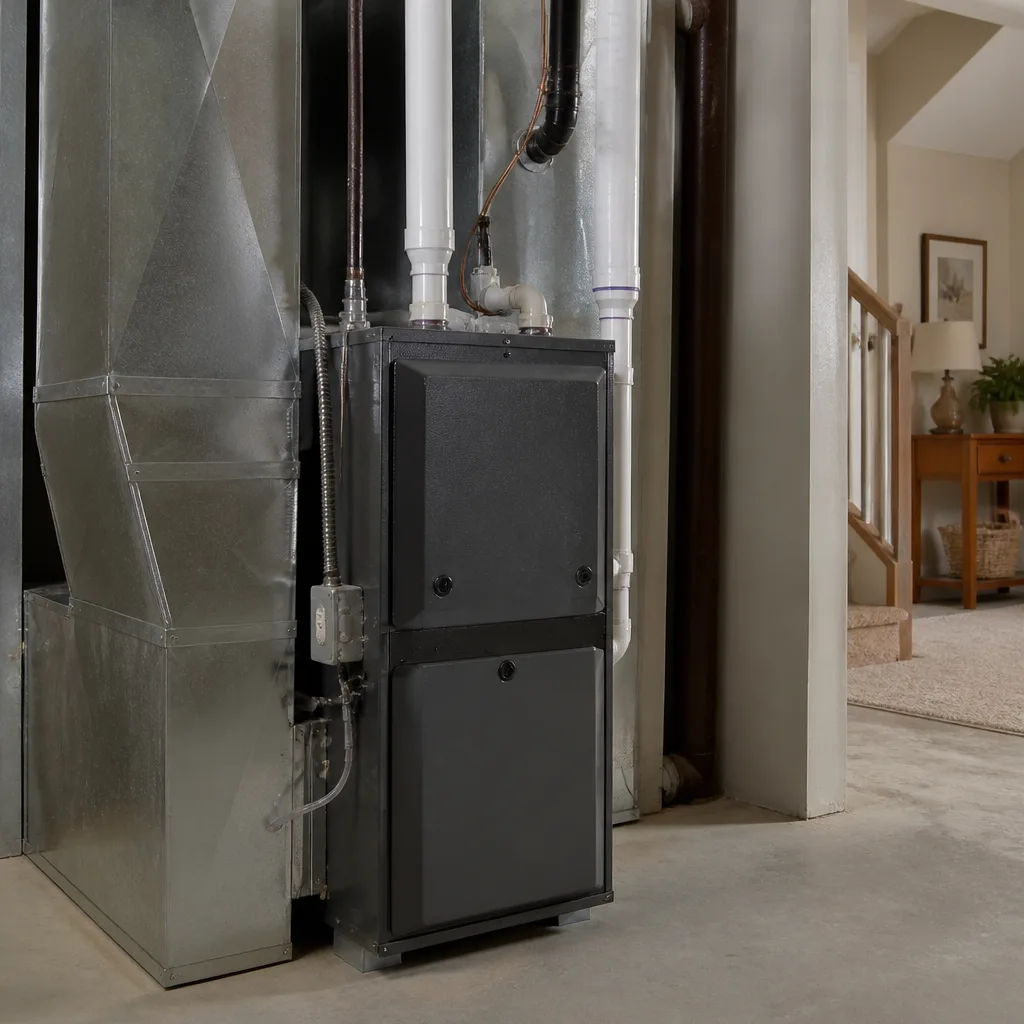 Furnace & heating
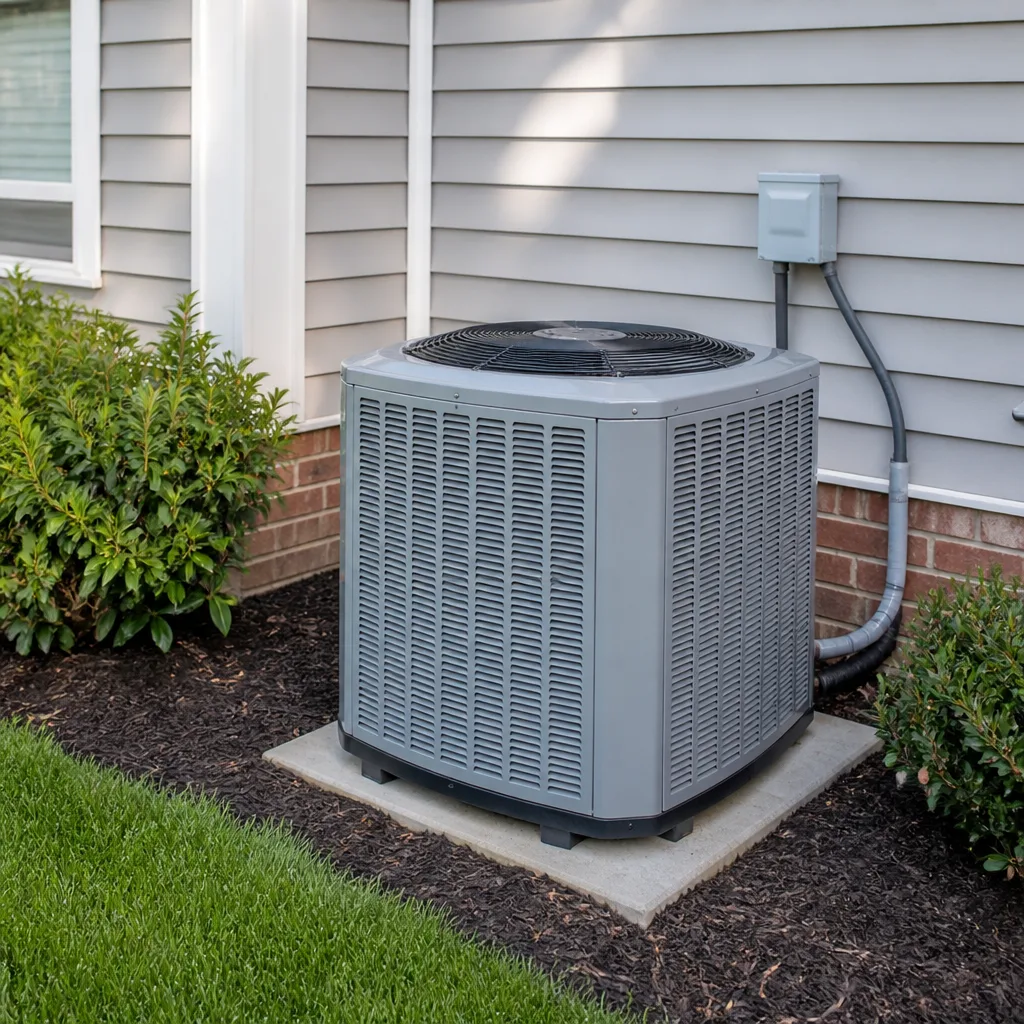 AC repair
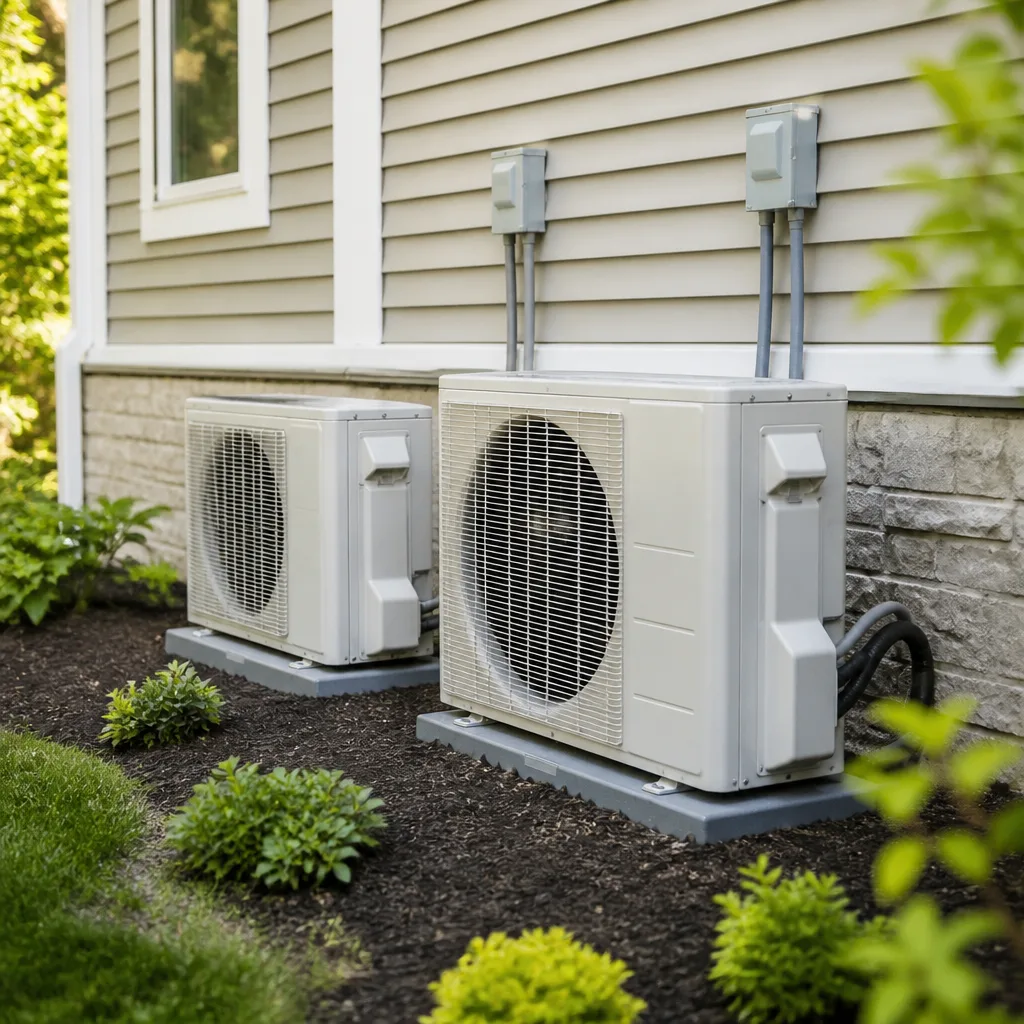 Heat pumps
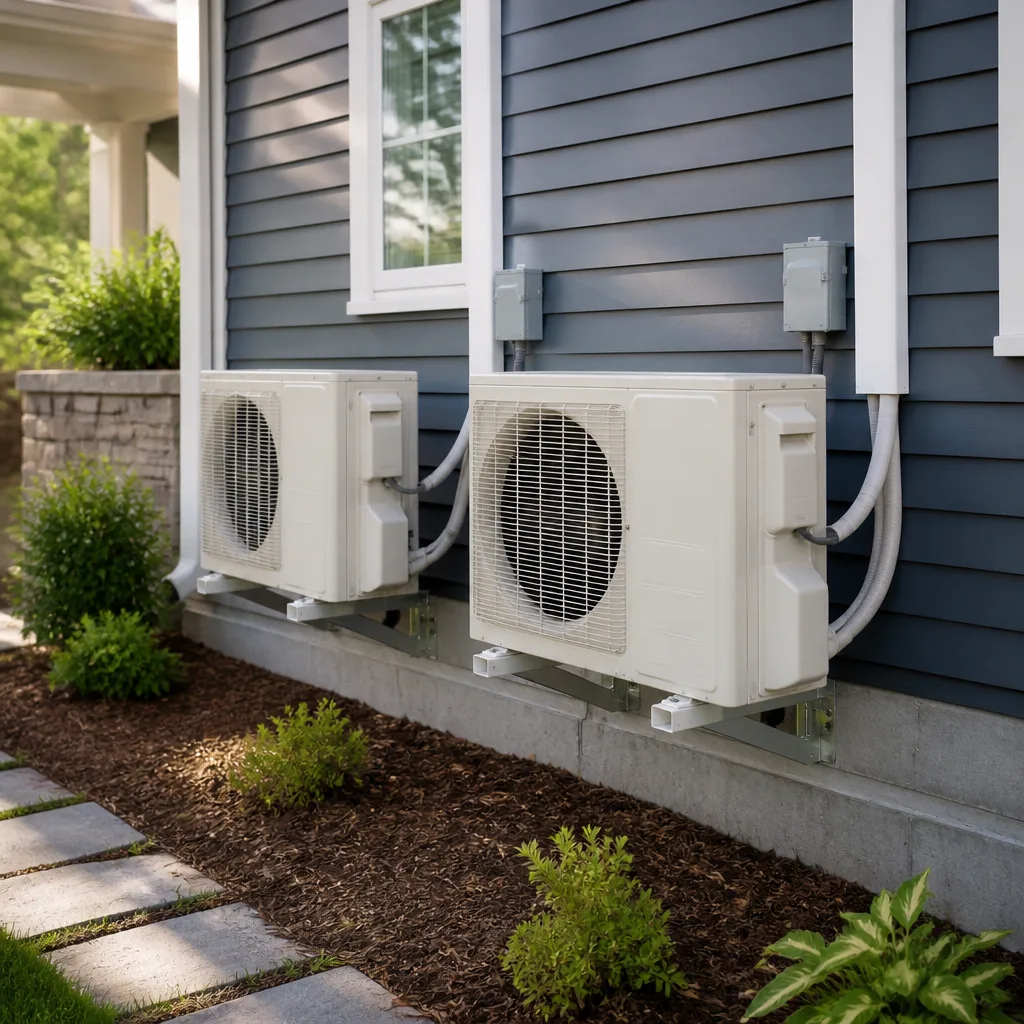 Ductless mini splits
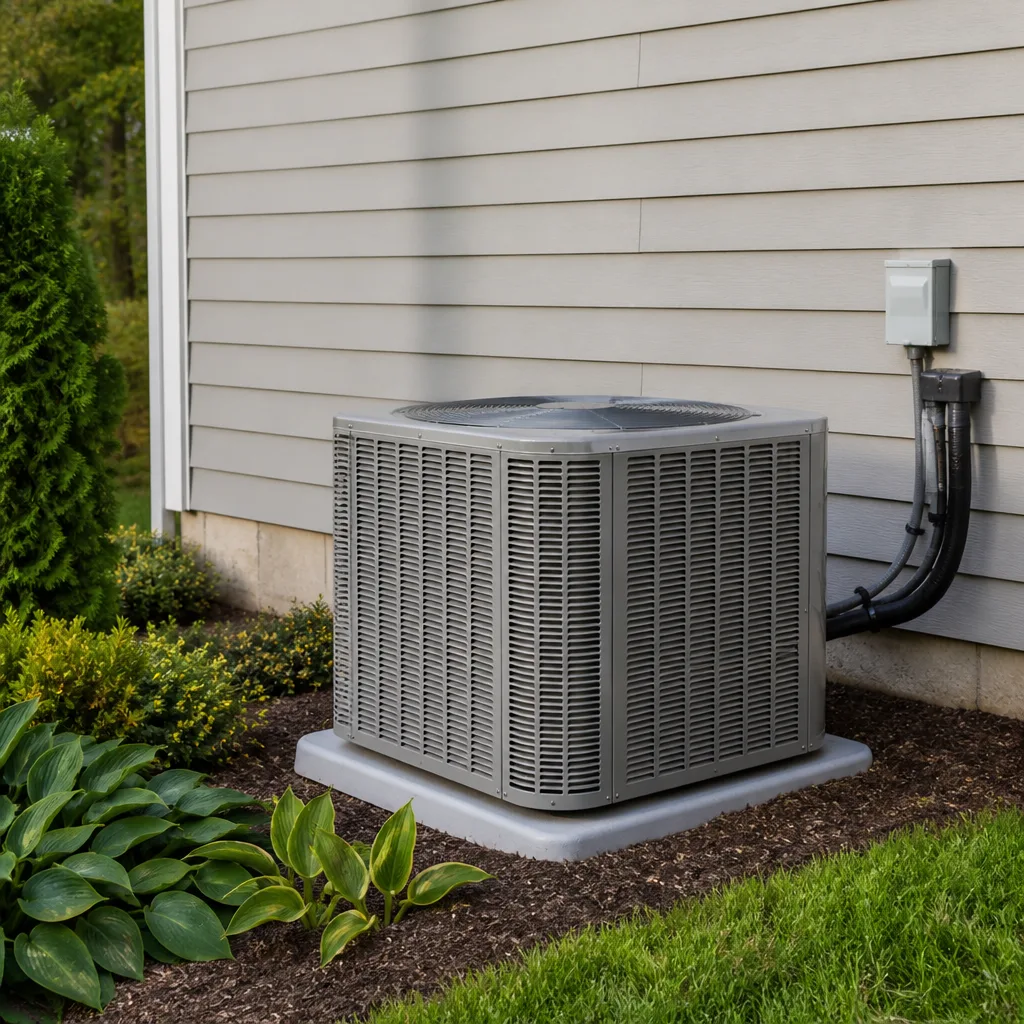 Carrier
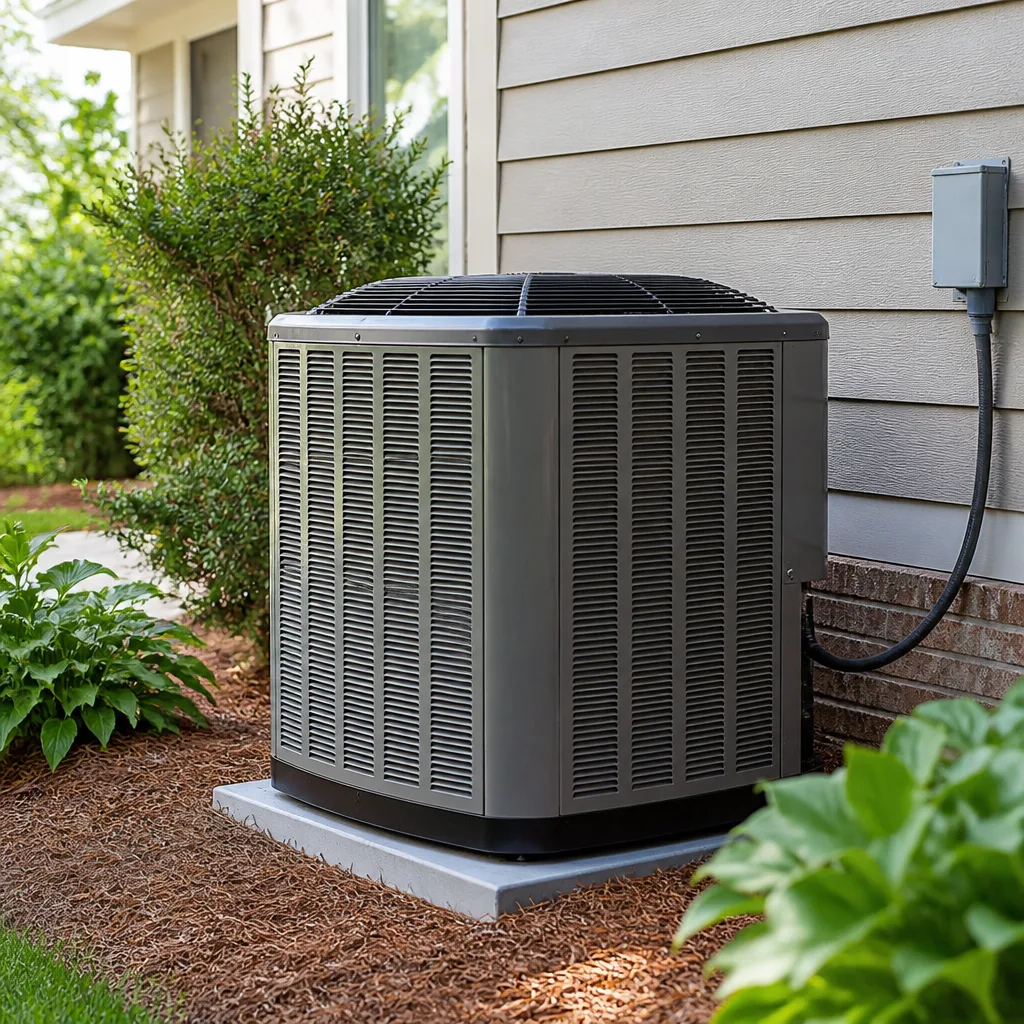 Trane
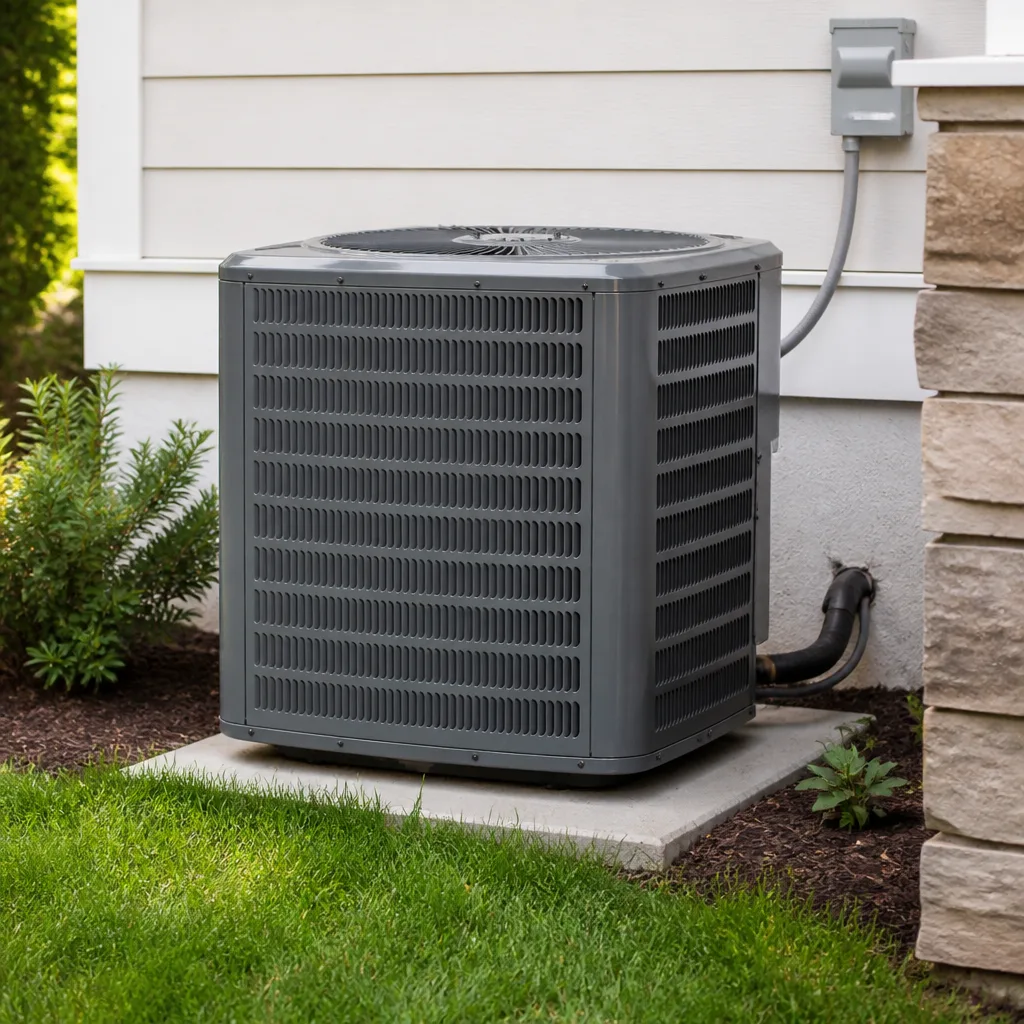 Goodman
Seasonal tune-up and full diagnostic on your Carrier, Trane, or Goodman system - readings shown to you before any repair is proposed
Diagnosis first, numbers second - you approve the repair price before a single part goes in.
Get your free estimateFurnace Replacement Maintenance Checklist for Salt Lake City Homeowners
Here’s a pattern we see again and again: a homeowner invests in a high-efficiency furnace, the installation looks clean, and by February the house still has cold rooms and a system that cycles more than it should. The furnace isn’t the problem. The duct system it was bolted onto was sized for the airflow of a different unit and nobody adjusted it. In Salt Lake City, where dry winter air and tight housing stock make airflow behave in specific ways, the decisions made before the new furnace goes in matter more than the box itself. This guide walks through the full replacement checklist – the pre-audit, the code checkpoints, and the sign-off tests that separate a good install from a great one.
Quick Answer
A furnace replacement in Salt Lake City needs three things done right: a Manual J load calculation before the new unit is sized, a static pressure test on your existing ductwork before the equipment is specified, and a post-install combustion analysis plus thermostat calibration before you sign off. Skipping any of these is the most common reason a new furnace fails to deliver promised comfort. Get all three and the new system will outperform what it replaced.
Styles & brands we work with
- AC repair
- Furnace & heating
- Heat pumps
- Ductless mini splits
- Carrier
- Trane
- Goodman
Table of Contents
- What to Audit Before You Replace a Furnace in Salt Lake City
- Why Static Pressure Testing Protects Your Investment
- The 80% to 95% AFUE Venting Question and Utah Code
- How to Verify a Manual J Load Calculation Was Done
- Post-Installation Checklist: What to Verify Before Sign-Off
- Brand-Specific Maintenance Intervals for Nine Major Brands
- Your First Winter With the New Furnace
- Common Mistakes to Avoid
- When to Call a Professional
What to Audit Before You Replace a Furnace in Salt Lake City
Before any contractor quotes a new furnace, the existing system deserves a serious look. In Salt Lake City, homes tend to run their furnaces hard for four to five months, and that duty cycle leaves a paper trail you should read carefully. The point of the pre-audit is to know what conditions the new furnace will inherit – not to talk yourself out of the replacement.
Here’s what a thorough pre-replacement audit covers:
- Heat exchanger inspection: Utah’s dry air ramps up the thermal cycling a furnace’s heat exchanger sees over a heating season. Micro-cracks and stress fractures that might take a decade to show up in a humid climate can appear sooner here. Ask for a visual inspection with a camera scope, especially on furnaces over ten years old.
- Ductwork survey: Count supply and return runs, note the size of each, and check for crushed flex duct, disconnected joints in unconditioned spaces, and undersized return plenums. A return that’s too small will starve any new furnace.
- Filter MERV history: Ask what filter the current homeowner has been running. Salt Lake Valley winter inversions push many households to high-MERV media filters, which add significant static pressure – something the new unit must be spec’d for.
- Return air pathways: Look for a return in every bedroom hallway and a central return sized appropriately. Old Salt Lake City homes from the mid-century era often have a single undersized return, which the new furnace will fight.
- Combustion air source: An 80% furnace in a tightly sealed basement utility room needs a combustion air supply. If your replacement candidate is a 95%+ unit (which draws air from outside), that calculus changes – but the existing room needs inspection either way.
- Electrical and gas supply: Confirm the existing circuit and gas line stub match the new furnace’s requirements. A 95%+ modulating furnace can draw more amperage or need a different gas pressure than the old single-stage box.
None of this takes the place of a contractor’s own inspection, but going through the list yourself keeps the conversation grounded. When a Salt Lake City contractor quotes a new furnace alongside a full audit, you know you’re working with someone who plans the whole system rather than the appliance alone.
Why Static Pressure Testing Protects Your Investment
Static pressure is the resistance the furnace blower has to push against as it moves air through your ducts. Measured in inches of water column, it’s the single most useful ductwork number in a replacement conversation – and the one most often skipped. A typical acceptable range for a residential system is roughly 0.5 inches of water column on the supply side and a similar figure on the return, for a total of around 0.5 to 0.8 inches combined, though every system has its own right answer.
Here’s why it matters in a furnace replacement: every furnace has a specific airflow curve. When you swap equipment, the new blower will push air against whatever static pressure your ducts already have. If that number is high – say 0.9 or 1.0 inches – the new furnace will move less air than its rating suggests. You’ll feel cold rooms, hear a louder blower, and shorten the life of the motor. The unit is fine; the ductwork is choking it.
What a proper static pressure test looks like:
- The technician drills small test ports into the supply plenum and return plenum at the furnace.
- With the blower running at its design speed, they take readings on both sides and add them.
- If the total is above the furnace’s rated maximum, the duct system needs adjustment before replacement.
- Adjustment can mean adding return air, enlarging a trunk, sealing leaks, or opening up register grilles – the fix depends on where the resistance actually lives.
- The reading is retested after any correction, and once more after the new furnace is in place.
We’ve seen plenty of Salt Lake City replacements where the new furnace underdelivers because nobody measured static pressure on the old ducts. If the number isn’t on the estimate or the post-install report, ask for it. A contractor who plans the whole system will have it ready.
The 80% to 95% AFUE Venting Question and Utah Code
Most Salt Lake City homes being replaced today have an 80% AFUE furnace vented through a metal flue to a chimney or a rooftop termination. Moving to a 95%+ AFUE condensing furnace isn’t just changing the box – it changes venting entirely. A condensing furnace produces acidic condensate and exhausts at lower temperature through PVC pipe, which means a different vent path, a drain for the condensate, and a different termination location.
The practical checklist for a high-efficiency venting change:
- New vent path: PVC (or CPVC) intake and exhaust piping run to an outside wall or up through the roof. The old metal flue is abandoned or repurposed.
- Condensate drain: A PVC drain line from the furnace to a floor drain, condensate pump, or exterior. Salt Lake City homes with basements typically route to a floor drain; above-grade installs use a pump.
- Electrically traced condensate line: Condensate can freeze in an unconditioned space during a Utah winter. If the drain runs through an unheated area, it needs heat tape or a different path.
- Termination placement: Intake and exhaust must be separated by the manufacturer’s specified distance, and terminations need to avoid areas where they’ll be blocked by snow or recirculate exhaust into the intake. Utah building code follows the International Mechanical Code, and local inspectors apply it – so ask your contractor what your city’s building department requires and show the inspector’s sign-off in the permit file.
- Permit: Furnace replacement generally requires a mechanical permit in Utah. Confirm the permit will be pulled before work starts. A contractor who skips the permit leaves you holding maintenance issues later.
If your home’s existing furnace vents through a masonry chimney shared with a water heater, the chimney may not be usable for a high-efficiency replacement. In that case you’ll need a new PVC vent path and possibly a chimney liner for the water heater. It’s a real cost item, and it should be in the written estimate before you sign.
How to Verify a Manual J Load Calculation Was Done
Manual J is the industry-standard method for calculating how much heat a house actually needs, based on square footage, insulation, window area and orientation, air leakage, and local design temperatures. In Salt Lake City, design temperatures for heating calculations are set by code and climate zone, and every home is different. Matching a new furnace to the old unit’s rated capacity is not a load calculation – it’s a shortcut that perpetuates whatever sizing mistake was made the first time.
The reason this matters: an oversized furnace short-cycles. It heats the house to setpoint quickly and shuts off, leaving cold corners because the air didn’t have time to circulate. Short cycling also wears out the heat exchanger faster and uses more gas than a correctly sized unit.
To verify a Manual J was done, ask for three things before signing:
- The report itself. A proper Manual J report runs several pages and shows room-by-room heat loss, the assumed design conditions, window and door counts, and the final BTU recommendation.
- The design temperature used. In the Salt Lake Valley, that’s typically the 99% heating design condition for the climate zone. Ask what number was used and confirm it matches the local code reference.
- The final sizing decision. The recommended furnace should land within roughly the 100% to 125% range of the calculated load. If the recommended unit is far above the report’s load, someone rounded up out of habit.
Ask what happens if the load calculation comes back different from the old furnace’s rated size. A contractor who provides Manual J will welcome the question. A contractor who won’t show you the report is matching old tonnage and calling it a load calculation.
Post-Installation Checklist: What to Verify Before Sign-Off
The install isn’t done when the truck pulls out. Before you sign off and make the final payment, work through this list with the technician present. A good contractor will walk you through it without being asked; a rushed one will not, which is exactly why you should ask.
Post-install verification:
- Combustion analysis: The technician should run a combustion analyzer on the new furnace and record the CO (carbon monoxide) reading in the exhaust, the O2 percentage, and the flue temperature. Ask for the printed results or a photo of them. A properly commissioned furnace has near-zero measurable CO and O2 in a normal range.
- Static pressure test result: The total external static pressure should be at or below the furnace’s rated maximum, with the numbers written down. If it isn’t, the duct system needs attention before the season.
- Temperature rise: The difference between return air temperature and supply air temperature should fall within the manufacturer’s specified range printed on the furnace data plate. Outside that range means the blower speed needs adjusting.
- Gas pressure: Inlet and manifold gas pressure checked and recorded.
- Thermostat calibration: Confirm the thermostat reads the true room temperature and the cycle times look right. If a new smart thermostat was installed, confirm the heat pump or furnace staging is configured correctly.
- Filter in place: Confirm the correct filter is installed, the size is written on the return, and you know the replacement schedule.
- Condensate drain: On a 95%+ unit, verify the drain is flowing freely with no leaks and no freeze risk.
- Permit inspection: Confirm that the mechanical permit will be closed out with your city’s building department.
If any of these items is skipped, that’s a reason to hold final payment until they’re done. It’s not adversarial – a professional contractor expects the request.
Brand-Specific Maintenance Intervals for Nine Major Brands
Different furnaces from different manufacturers have different service needs, and the brand-specific intervals are a place where general checklists miss the mark. Here’s a comparative starting point for the brands we service – Carrier, Trane, Lennox, Goodman, Rheem, York, Daikin, Bryant, and American Standard – with the note that your contractor’s specific recommendations for your model and climate should override these general intervals.
Filter schedule by brand family:
- Carrier and Bryant (same manufacturer family): standard 1-inch filters typically need replacement every 1 to 3 months; high-MERV media filters every 6 to 12 months. Carrier’s Infinity series often runs with a proprietary filter cabinet, so replacement filters need to match the cabinet size.
- Trane and American Standard (same manufacturer family): similar filter cadence, but Trane’s variable-speed air handlers respond more dramatically to a dirty filter – reduced airflow shows up as increased run time quickly.
- Lennox: filter changes every 1 to 3 months for standard 1-inch; the brand’s high-efficiency models pair with their own filter cabinets, so check the size before buying replacement filters.
- Goodman: filter replacement intervals similar to the rest, but Goodman’s basic single-stage furnace is often paired with an inexpensive filter setup – upgrading to a deeper media filter is worth considering in dusty Salt Lake Valley settings.
- Rheem: 1-inch filters every 1 to 3 months; the brand’s modulating models respond well to a slightly deeper filter cabinet to lower static pressure.
- York: standard filter cadence; York’s higher-efficiency models benefit from inspecting the condensate trap more often than the manufacturer’s minimum, given our cold-dry climate.
- Daikin: filter replacement every 1 to 3 months; Daikin’s communicating systems display filter life on the thermostat, which makes tracking easier than a paper calendar.
Igniter and flame sensor inspection:
- Silicon nitride igniters (common on Carrier, Bryant, Trane, American Standard, Lennox, and many Daikin/Rheem/York models) typically last five to seven years. Annual inspection is the minimum; in Salt Lake City’s dry air, they don’t tend to fail early, but they do fail without warning, and a routine check catches signs of pending failure.
- Flame sensors need cleaning every two to three years on every brand. The sensor tip can build up a thin oxidation layer that reads as a “no flame” signal, which shuts the furnace down. It’s a two-minute cleaning when it’s caught early.
- Hot surface igniters in older furnaces (roughly ten years or older) should be inspected every season, whatever brand. Age is the risk factor, not the manufacturer.
Heat exchanger inspection cadence: On all nine brands, an annual visual inspection with a camera scope is worth doing from about year eight onward. In Salt Lake City’s dry climate, thermal cycling stresses the metal more than in more humid regions, so this is where brand differences fade and diligence matters most. Ask the technician to show you the camera image – not just tell you it’s fine.
If you’re not sure what brand is in your home, check the data plate inside the furnace access panel. Whatever the brand, Lockhart AC Repair works on it. That’s the entire reason we keep training on nine manufacturers: homeowners in the Salt Lake Valley shouldn’t have to hunt down a different contractor because of the label on their equipment.
Your First Winter With the New Furnace
The first heating season after a replacement is the testing ground for every decision made before installation. A properly planned replacement will deliver steady comfort and lower gas consumption; a rushed one will show symptoms. Here’s what to watch for in the first few weeks of cold weather in Salt Lake City.
- Cycle time: A two-stage or modulating furnace should run in low stage most of the time, ramping up when the house calls for more heat. If yours jumps to high stage immediately on every call, the staging is misconfigured or the furnace is oversized.
- Room-by-room temperature: Walk through the house on a cold morning and note any rooms that stay more than a couple of degrees cooler than the thermostat setpoint. This is the static pressure conversation returning – the new blower’s airflow may not reach a far bedroom with a small supply register.
- Sound: A properly commissioned furnace should be quieter than the old one, especially on a variable-speed blower. Banging, whistling at registers, or a blower that sounds labored are signals worth a call.
- Gas usage: Compare a full month’s gas bill to the same month last year after adjusting for outside temperature. The new unit’s higher efficiency (95%+ vs. 80%) should show up in the usage figure, not just the rate.
- Condensate: If you replaced to a 95%+ unit, glance at the condensate drain every week in the first month. Any leaks, drips, or freeze-ups need attention before they become an outage.
- Filter changes: Follow the brand-specific interval you were given at sign-off. In Salt Lake City’s inversion season, many homeowners find they need to change filters more often than the interval suggests – that’s normal and worth noting.
Ask your contractor what the expected behavior of the new system looks like in the first winter. A good sign-off includes a written summary of cycle times to expect, the filter schedule, and what symptoms should prompt a call. That’s what taking ownership of the whole system looks like.
Common Mistakes to Avoid
- Skipping the Manual J report because “we have the old unit’s specs.” Matching the old tonnage just repeats the first installer’s decision, whether or not it was right. Always ask for a fresh load calculation.
- Ignoring static pressure on the existing ducts. If the ducts were choking an 80% furnace, they’ll choke a 95% furnace more. Static pressure leads to real fixes; ignoring it leads to cold rooms.
- Letting a contractor skip the permit. Mechanical permits in Utah exist for a reason, and unpermitted installs can affect future sales inspections and insurance. Confirm the permit is pulled.
- Choosing a 95%+ furnace without checking the vent path. The old metal flue won’t work for a condensing unit. If the venting change isn’t in the estimate, the number on the invoice is not the real number.
- Accepting a walk-through without combustion analysis documentation. The analyzer reading is the proof the new furnace is running clean. If it’s not on paper, ask why.
- Replacing the thermostat “because we’re already in there” without checking compatibility. Not every smart thermostat plays nicely with every variable-speed or communicating furnace, and a mismatch can cut the new system’s efficiency in half.
- Treating filter changes as a spring and fall chore. In Salt Lake Valley inversion season, monthly filter checks matter more than the calendar. Ignoring it raises static pressure and costs efficiency.
When to Call a Professional
Some decisions in a furnace replacement are judgment calls; others need a trained hand. Call a professional for the Manual J load calculation itself, the static pressure test on existing ducts, any combustion analysis, and any heat exchanger inspection – these require calibrated equipment and the training to interpret results. Call when you notice symptoms like cold rooms persisting after replacement, a furnace that short-cycles, unusual noises, or a flue that shows corrosion or soot. Call when you’re unsure whether your existing furnace needs furnace repair or full replacement – that’s the single decision where a repair-only or install-only model tends to push toward its own answer, and a contractor set up to do both will give you the honest one. Lockhart AC Repair offers free estimates in Salt Lake City – call (855) 473-8712. We answer 24/7. Fast dispatch from 7am to 7pm, Sunday through Friday.
See the difference
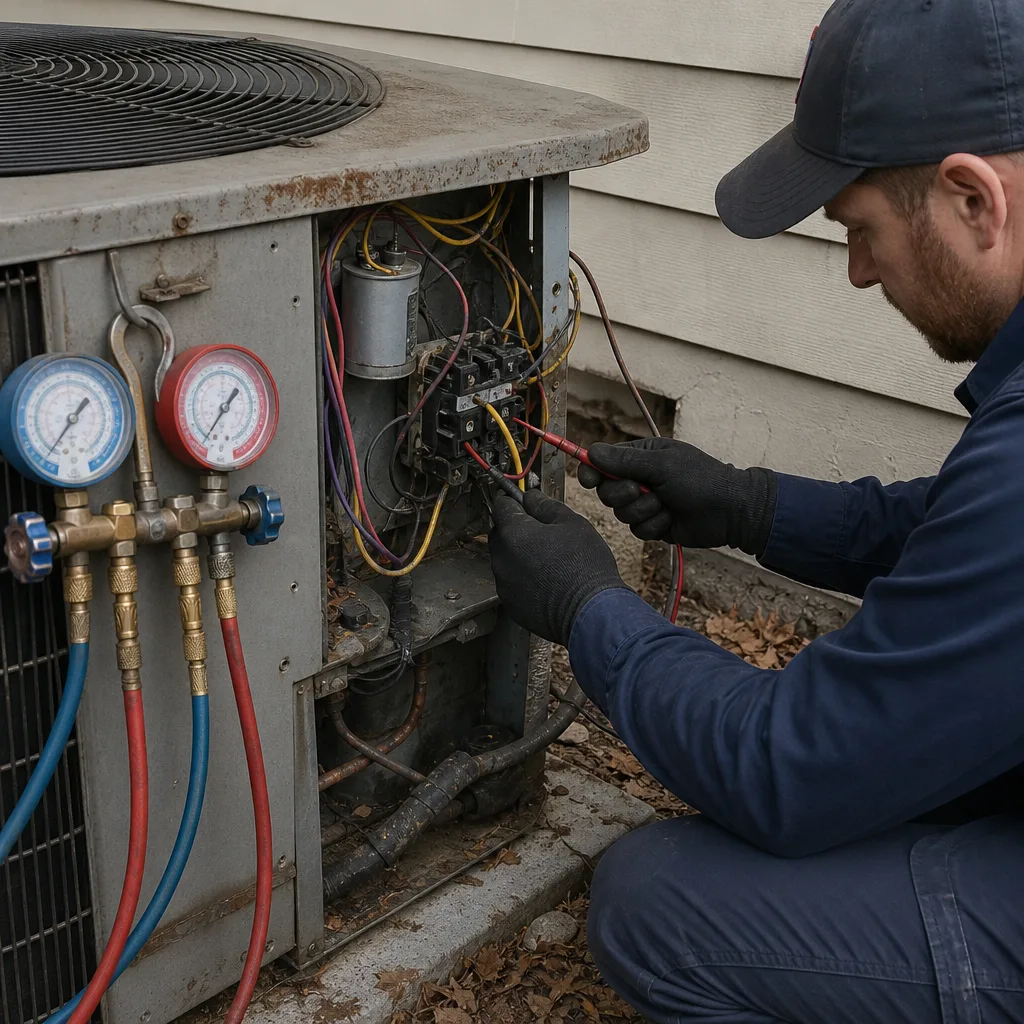 Before
 After
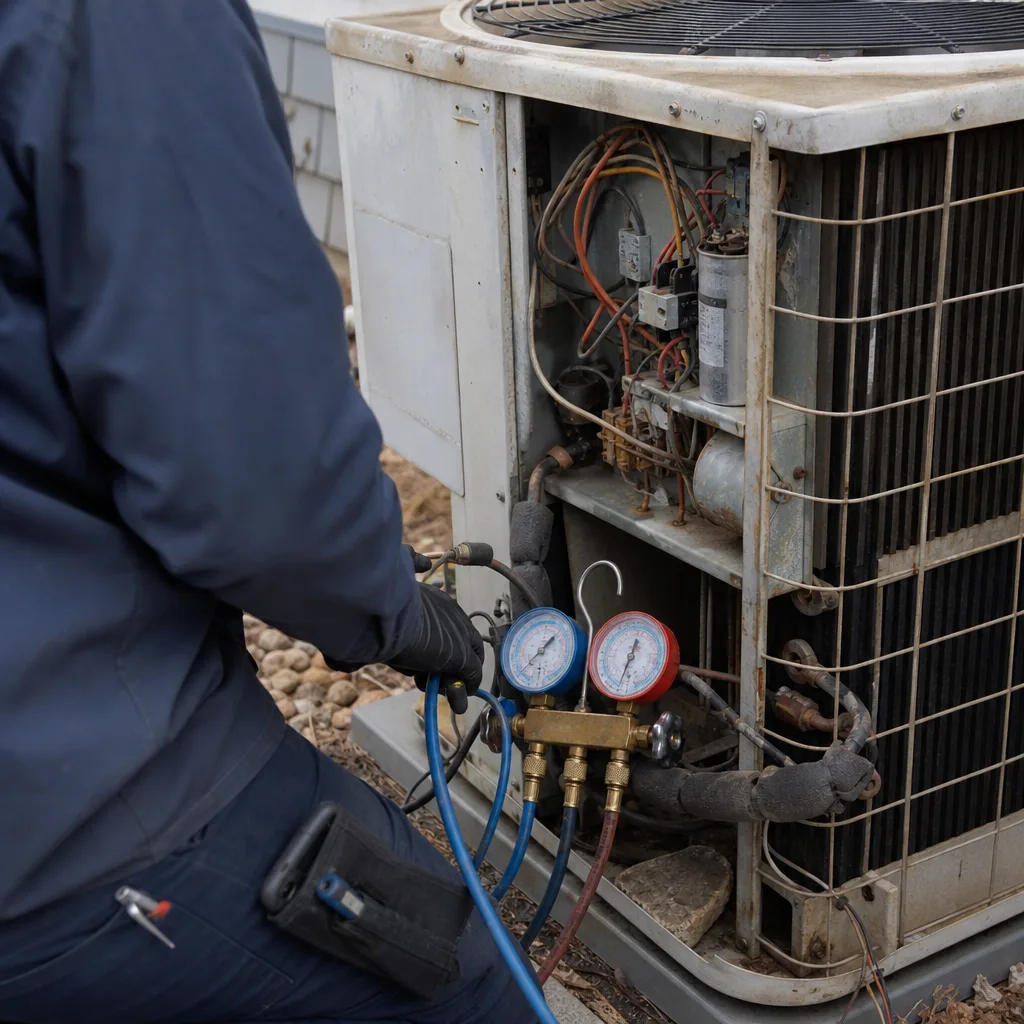 Before
 After
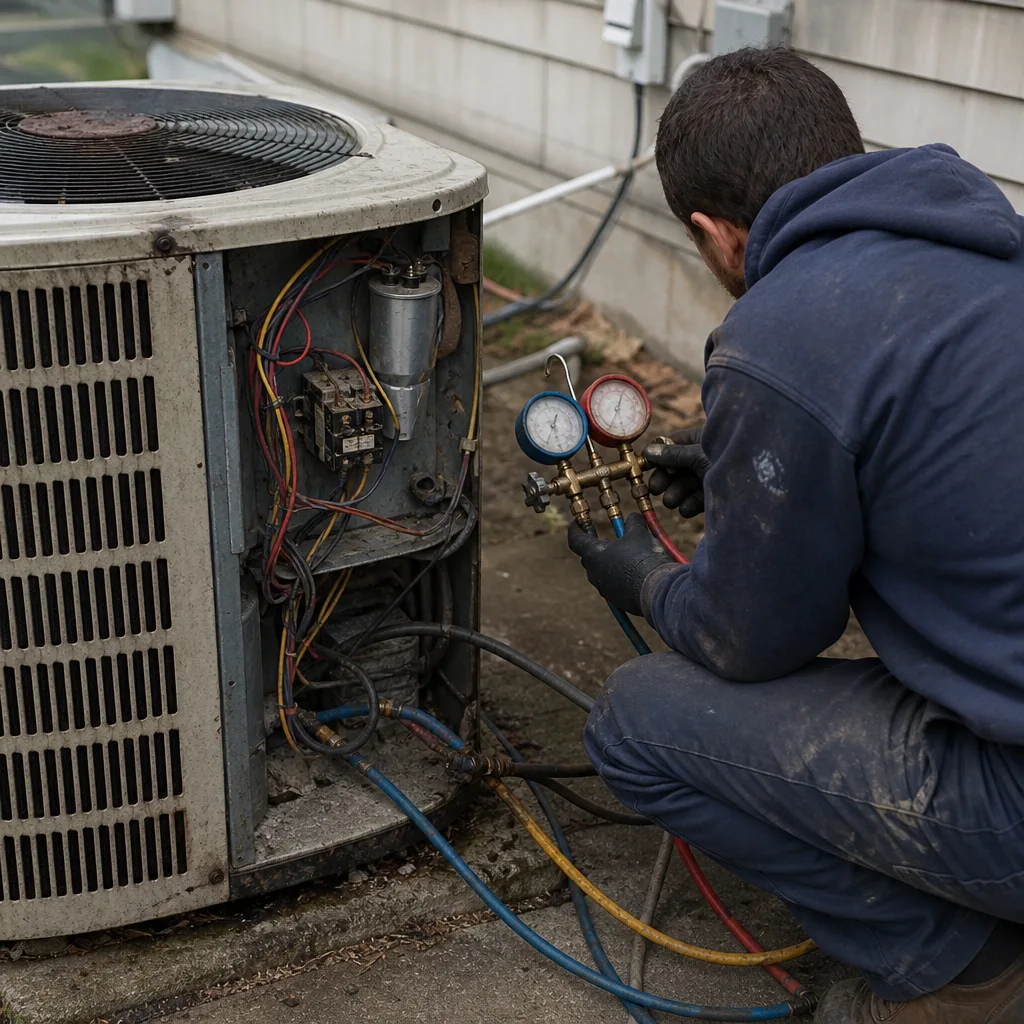 Before
 After
Frequently Asked Questions
It varies by equipment tier, venting changes, and ductwork needs. A standard 80% AFUE replacement with existing venting typically costs less than the same swap to a 95%+ AFUE unit that requires a new PVC vent path, and any duct corrections or return-air work add to that number. The written estimate you receive should itemize equipment, venting, permit, and any duct adjustments – that’s the final number. Call (855) 473-8712 for an exact quote – estimates are free.
Yes. Manual J uses your home’s actual characteristics – square footage, window orientation and count, insulation, air leakage, and Salt Lake City’s local design temperature – to determine the right furnace size. Without it, you’re guessing based on the old unit’s label, which may itself have been sized wrong. A reputable contractor should provide the report for you to review.
Often yes, if the existing flue and venting are in good condition and the furnace is still performing. The trade-off is long-term efficiency: a 95%+ furnace burns less gas per unit of heat delivered. If your existing metal flue needs replacement, the cost math shifts toward high-efficiency. A contractor who offers both AC installation and furnace services can talk through the numbers honestly.
Most gas furnaces are expected to deliver 15 to 20 years of service, though Salt Lake City’s dry-air thermal cycling and inversion-season filter loads mean regular maintenance matters more than the calendar. Annual inspections from about year eight onward catch heat exchanger stress before it becomes a safety issue. The equipment brand matters less than the maintenance history.
On a properly commissioned furnace, measurable CO in the flue is effectively zero – a few parts per million at most. Anything more is a signal to investigate venting, combustion air, or burner adjustment. Always ask for the combustion analyzer printout at sign-off; a professional will hand it over without hesitation. Call (855) 473-8712 to schedule a post-install verification – estimates are free.
Two signs point to an oversized furnace: short cycles (the unit heats quickly and shuts off before circulating air through all rooms) and persistent cold rooms despite the furnace running. If your existing system shows either symptom, don’t replace it with the same size. Insist on a Manual J this time. A contractor in Salt Lake City who works with multiple brands has no incentive to steer you toward a particular size beyond what the calculation shows.
The Bottom Line
The furnace replacement itself is one decision among many. The load calculation, the static pressure test, the venting plan, the permit, the combustion analysis at sign-off, and the brand-appropriate maintenance interval all shape whether the new system outperforms the old one. Get those right and the difference shows up every winter. Get them wrong and you’ll be calling someone else in February. Lockhart AC Repair services furnace replacement, furnace repair, and AC installation across nine major HVAC brands – Carrier, Trane, Lennox, Goodman, Rheem, York, Daikin, Bryant, and American Standard. Our technicians have up to 15 years of experience, and we’ll tell you the truth on repair versus replace. Call (855) 473-8712 for a free estimate. We answer 24/7. Fast dispatch from 7am to 7pm, Sunday through Friday.
Written by the team at Lockhart AC Repair.