
Last updated November 15, 2026
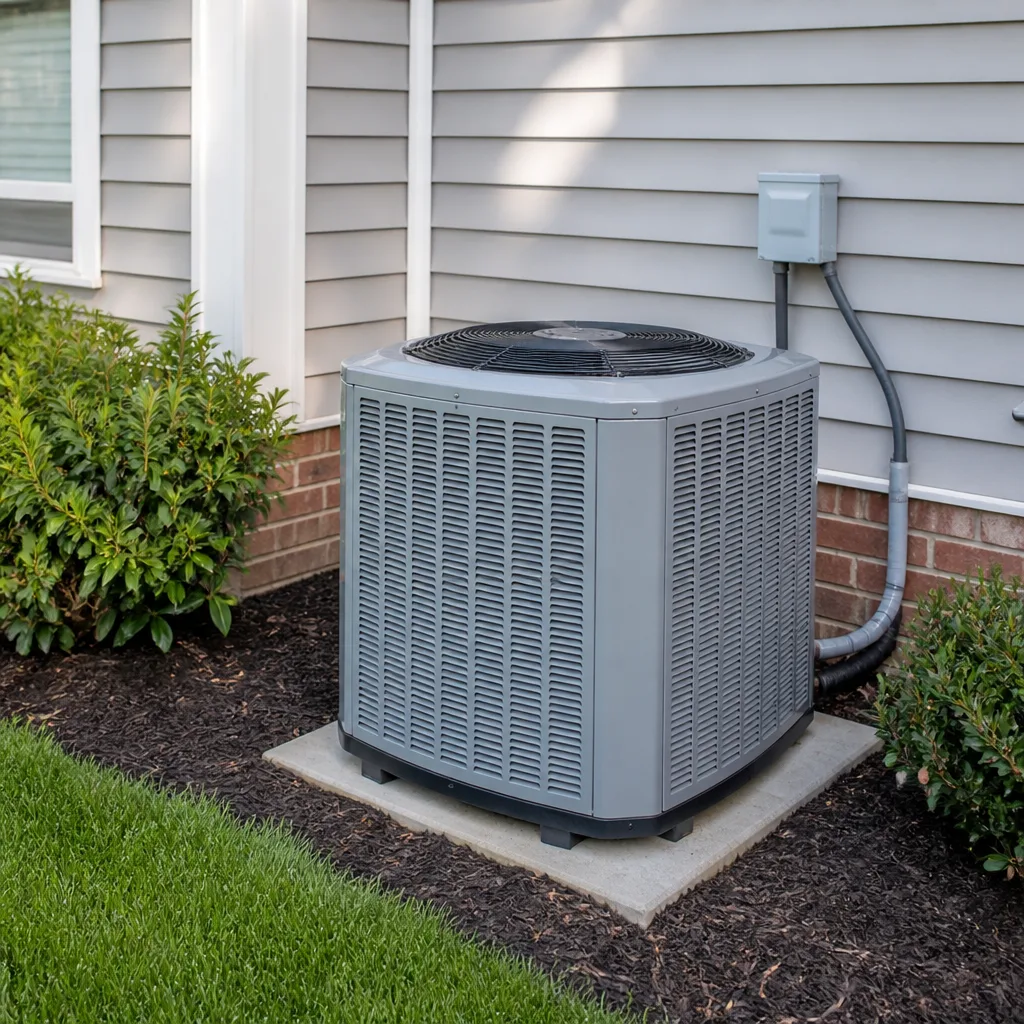 AC repair
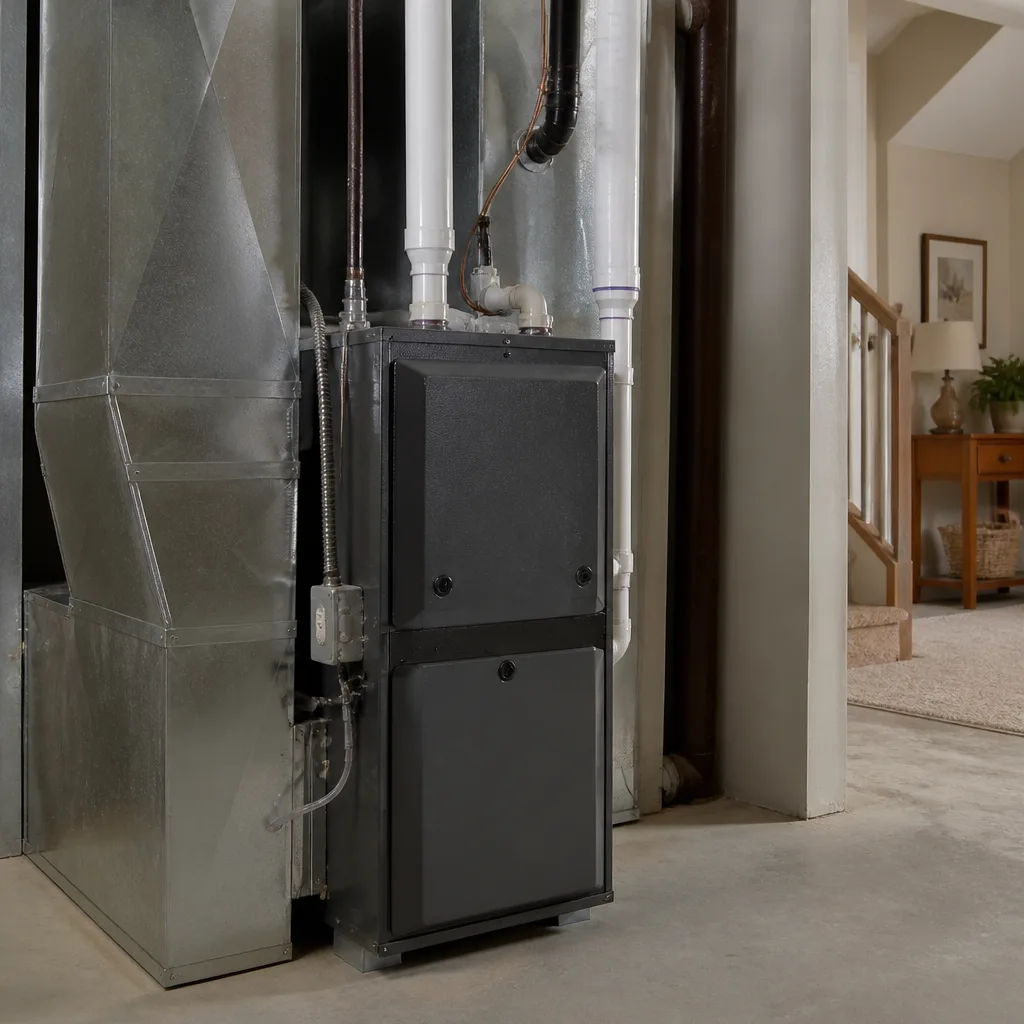 Furnace & heating
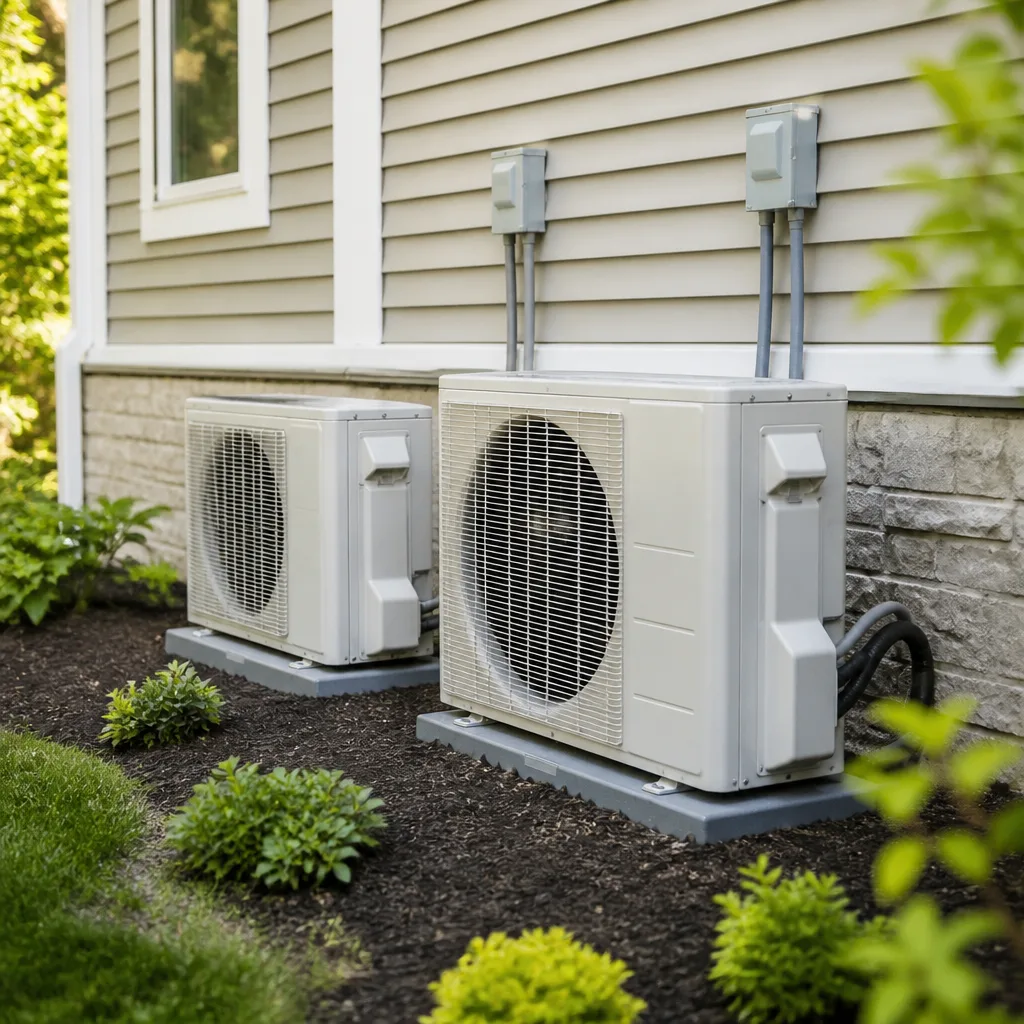 Heat pumps
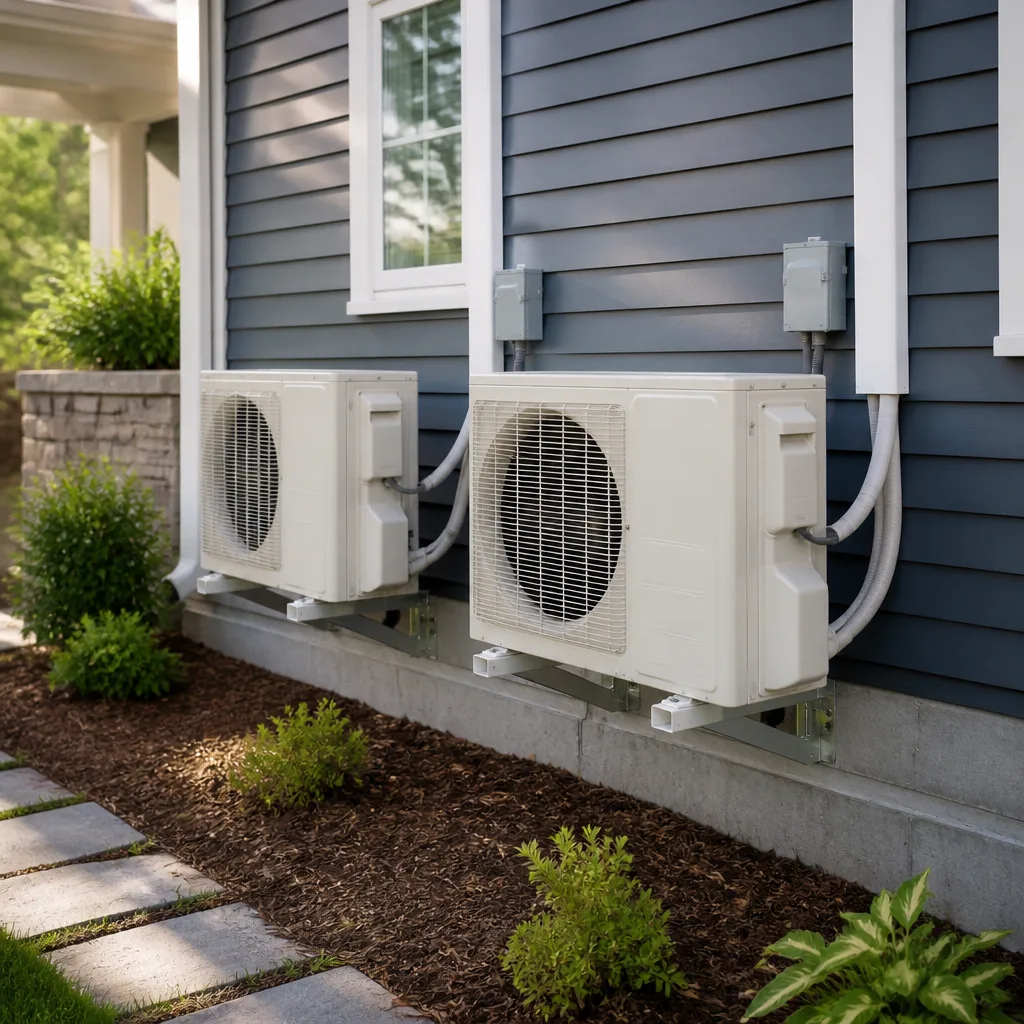 Ductless mini splits
 Carrier
 Trane
 Goodman
Seasonal tune-up and full diagnostic on your Carrier, Trane, or Goodman system - readings shown to you before any repair is proposed
Diagnosis first, numbers second - you approve the repair price before a single part goes in.
Get your free estimateHVAC Cost Breakdown: The Salt Lake City Homeowner’s Reference for 2026
Two quotes for the same furnace and coil swap in Salt Lake City often land $4,000 apart. The cheaper number isn’t automatically a bargain, and the higher one isn’t automatically fair. The gap almost always traces back to three things: equipment sized by guesswork instead of a load calculation, a permit that never gets pulled, and a warranty that runs short or won’t transfer when you sell the house. This guide breaks a replacement down line by line, with 2026 price ranges for each item, so you can see exactly where the money goes and judge whether a quote’s savings are real or borrowed from somewhere you’ll pay for later.
Quick Answer
A correctly priced HVAC replacement in Salt Lake City in 2026 usually runs roughly $7,500-$14,000 for a standard split system, with the spread driven by equipment tier, home size, and how much duct and electrical work the job needs. Line items that should always appear: equipment, refrigerant, permit, labor, commissioning, haul-away, and warranty registration. A quote that’s missing any of those isn’t cheaper – it’s incomplete, and the missing cost lands on you later.
Styles & brands we work with
- AC repair
- Furnace & heating
- Heat pumps
- Ductless mini splits
- Carrier
- Trane
- Goodman
Table of Contents
- What a Correctly Priced HVAC Replacement in Salt Lake City Actually Includes
- How Equipment Brand Changes the Math: Upfront Cost vs. 10-Year Cost of Ownership
- The Altitude Premium Nobody Quotes Upfront
- Rebates and Tax Credits: What’s Actually Worth Stacking in 2026
- Repair or Replace? A Decision Framework by System Age
- What It Costs to Run a System in Salt Lake City’s Climate
- How to Read an HVAC Quote Line by Line
- Common Mistakes to Avoid
What a Correctly Priced HVAC Replacement in Salt Lake City Actually Includes
A fair HVAC quote is a list of separate line items, not one round number. When you can see each piece, you can compare two bids honestly and spot the one that’s quietly missing something. Here’s how the pieces break down for a typical Salt Lake City home with a standard split system in 2026.
| Line Item | Typical 2026 Range | What It Covers |
|---|---|---|
| Equipment (condenser + air handler/furnace) | $3,500-$8,500 | Depends heavily on tier and brand; the biggest single variable |
| Refrigerant charge and line set | $200-$700 | New refrigerant, sometimes new line set if the old one won’t hold pressure or isn’t compatible |
| Permit | $150-$450 | Pulled with the city; covers inspection of the install |
| Labor | $1,200-$3,000 | Removal, install, brazing, wiring, startup; scales with access difficulty |
| Commissioning | $150-$350 | Charge verification, airflow check, temperature split, documentation |
| Haul-away and disposal | $100-$300 | Old equipment removed and disposed of properly |
| Warranty registration | $0 (should be included) | Paperwork filed with the manufacturer so the warranty is valid |
Add those up and you land in the $7,500-$14,000 range for a standard replacement, with ductwork or electrical upgrades pushing it higher. The single biggest reason quotes diverge is equipment tier – but the second biggest is what a contractor chose to leave off the page. A bid that skips the permit or the commissioning step looks cheaper because it is, in the sense that the work isn’t fully done.
We’ve seen enough Salt Lake City jobs to know that a homeowner comparing three bids usually focuses on the bottom line. The line items tell a better story. Ask each contractor to break the quote out the same way and the honest ones will match up quickly.
How Equipment Brand Changes the Math: Upfront Cost vs. 10-Year Cost of Ownership
At the same SEER2 rating, brand accounts for a smaller share of total cost than most homeowners assume. The bigger swing is tier – a base model from any brand costs meaningfully less upfront than a premium model, and the running-cost difference over ten years is what you should actually weigh. Here’s how the brands stack up in the Salt Lake City market in 2026.
- Goodman – Usually the lowest upfront price among the major brands. Base-tier equipment is common in Salt Lake City new construction and rental stock. Parts availability is broad. Long-term cost of ownership is fine if the install is done well; a Goodman installed poorly costs as much to run as a premium brand installed poorly.
- Daikin – Mid-tier pricing, strong on inverter-driven equipment and heat pump performance. For a Salt Lake City home leaning on the heat pump in shoulder seasons and a furnace in deep winter, Daikin’s dual-fuel options are worth pricing out.
- Bryant – Sits in the mid-to-upper range, essentially the same platform as its parent brand’s comparable models. Warranty support is strong, and parts are widely available locally.
- American Standard – Upper-mid pricing with a reputation for durable compressors. When we’re pricing a replacement for a homeowner who plans to stay in the house for the long haul, American Standard often lands in the recommendation.
The 10-year cost of ownership math is where the brands separate. Assume a moderate cooling load through Salt Lake City summers and a real heating load through winter. A premium-tier unit at a higher SEER2 saves meaningfully on the cooling side – but if your home’s ductwork is leaky or undersized, the equipment savings get eaten by distribution losses. That’s why we push a load calculation and a duct check before we recommend a brand tier at all. Fixing the envelope first sometimes lets a homeowner buy mid-tier equipment and still land close to premium-tier efficiency.
Bottom line: brand choice matters, but it’s the third or fourth most important factor after sizing, install quality, and duct condition. Whether a brand is Goodman or Trane, the install determines most of the long-term cost.
The Altitude Premium Nobody Quotes Upfront
Salt Lake City sits at roughly 4,300 feet, and that elevation changes how combustion equipment runs. Some high-efficiency furnaces ship configured for sea level and need a field conversion – different orifices, a different gas valve setting, or a specific high-altitude model – before they’ll run safely and efficiently here. That work has a cost, and it’s the line item missing from more quotes than any other.
- Ask the contractor whether the quoted furnace is already rated for 4,300+ feet or will need a conversion kit. If they don’t know, that’s your answer on how careful the install will be.
- Request the high-altitude documentation. A correctly configured furnace is set up per the manufacturer’s high-altitude instructions and the install is verified at commissioning.
- Confirm the derate math. Gas input typically reduces at elevation, and the airflow and temperature rise need to be checked against that. A furnace that isn’t set up right runs hotter, wears faster, and can void the warranty.
- Look for the “high-altitude” line on the quote. Whether it’s labeled that way or bundled into equipment, a quote that ignores altitude isn’t wrong by accident – it’s missing a step.
What does the altitude premium cost? It varies by manufacturer and model – sometimes it’s a small parts cost, sometimes it means a specific model substitution that runs a few hundred dollars more. What matters is that the quote surfaces it up front rather than during install day, when you’ve already committed and can’t get a second bid.
The same applies to AC equipment, though to a lesser degree. Airflow and static pressure behave differently at elevation, and a system that’s fine on paper lower down can run noisy or starved here. A load calculation done at Salt Lake City’s elevation picks up on that.
Rebates and Tax Credits: What’s Actually Worth Stacking in 2026
Stacking rebates and tax credits is legitimate and often worth hundreds to several thousand dollars – but only if the equipment you buy qualifies, and only if the paperwork gets filed. Rebate programs change yearly and depend on your utility, equipment tier, and sometimes your home’s baseline efficiency. Rather than quoting a number that might be stale by the time you read this, here’s how to get the real figure.
- Check both utilities. Your electricity provider (Rocky Mountain Power in most of the Salt Lake City area) and your natural gas utility (Dominion Energy) each run efficiency programs. Some equipment qualifies with one, some with both. Ask which rebates the contractor will file for you in writing.
- Qualify by efficiency tier, not by brand. Rebates typically require a minimum SEER2 for cooling and a minimum AFUE for heating. A higher-tier unit qualifies; the same home with a base model may not.
- Stack with the federal 25C credit. The federal energy efficiency improvement credit is separate from utility rebates and can apply to qualifying equipment in the same project. Talk to a tax professional about your specific situation.
- Watch the timing. Rebate programs are budget-limited. Equipment bought after the annual program budget is used up doesn’t retroactively qualify, so ask the contractor to confirm funding is still available before install day.
What this looks like in practice: a homeowner with an aging furnace and AC replacing both at a qualifying tier might stack a utility rebate on the heating side, a separate rebate on the cooling side, and the federal credit – each of which needs its own paperwork and each of which needs a proper invoice. Ask the contractor to handle the rebate filing as part of the install. An experienced furnace repair and replacement technician should know which tiers qualify in this market.
We’ve seen rebate paperwork go unfiled because the contractor didn’t offer – and homeowners lose out because they didn’t ask. Ask.
Repair or Replace? A Decision Framework by System Age
Age alone doesn’t decide the question, but it’s the starting point. Here’s how we frame the decision for Salt Lake City homeowners.
- Under 8 years old. Repair almost always makes sense. A compressor or blower failure on a system this young is a component issue, not a worn-out unit. Fix it, keep up with maintenance, and revisit in five years.
- 8-12 years old. Repair is still usually correct unless the repair cost approaches half the replacement cost. A $1,800 repair on a $6,000 system is a judgment call; a $3,200 repair on the same system is a replacement.
- 12-15 years old. This is the zone where replacement often wins. The remaining lifespan is short, efficiency is well below current standards, and a second major failure is likely. Budget for replacement rather than waiting for the failure.
- 15+ years old. Replace. Even a functioning system this old is costing you in efficiency and is one failure away from an emergency. Take the planned replacement over the surprise one.
Two more things push the decision earlier. First, refrigerant type. Older systems on R-22 (phased out) can face refrigerant costs that make repair uneconomical on their own. Second, repeated repairs: if you’re calling for a fix more than once a year on the same system, the pattern matters more than any single failure.
What we won’t do is tell a homeowner to replace a system that doesn’t need replacing, or repair one that will cost them more within a year or two. Our technicians work across York, Daikin, Bryant, and American Standard equipment daily, which means the recommendation comes from what the system actually needs, not from what we prefer to sell. Repair or replace? We’ll tell you the truth – and back it up with the numbers.
What It Costs to Run a System in Salt Lake City’s Climate
Salt Lake City is a genuine two-season climate. Summer afternoons push into the mid-90s and the valley holds heat into the evening; winter pulls the other way with sustained cold that runs the furnace hard from November into March. That means both the cooling and the heating side of your system earn their keep, and efficiency improvements pay back on both sides.
Running costs in 2026 depend on three factors more than any other: equipment efficiency tier, how well the house is air-sealed and insulated, and how much of the load the ductwork delivers to the rooms it’s meant to serve. A high-efficiency furnace paired with leaky ducts and a poorly balanced system burns more gas than a mid-efficiency furnace on a tight, well-balanced distribution.
- Heating dominates the annual bill. In a Salt Lake City home, gas furnace operation typically outweighs electric AC operation over the year. That’s why furnace efficiency tier often matters more than AC efficiency tier when you’re deciding where to spend the upgrade dollars.
- Duct condition is the unseen variable. Ducts run through unconditioned attic or crawl space lose energy to the surrounding air. Sealing and insulating them is often a cheaper win than an equipment upgrade – and it makes the equipment you already have perform closer to its rated efficiency.
- Setbacks and maintenance matter. A well-maintained system running on a reasonable schedule costs less per year than a neglected system of the same age. Annual tune-ups are the cheapest cost-of-ownership lever you have.
If you’re trying to estimate your running-cost change from a replacement, ask the contractor for the projected annual operating cost of the proposed equipment given your home and your usage. A good one will offer it without being asked.
How to Read an HVAC Quote Line by Line
Reading a quote carefully before you sign is the single most effective way to avoid the $4,000 gap in the other direction – paying too much for the same work. Walk through these steps for every bid you collect.
- Confirm the equipment model number and full spec. Brand and tier only matter if the model number is written down. Ask for it and check it against the manufacturer’s spec sheet. A quote with “Trane 3-ton” and no model number is one you can’t compare.
- Confirm the load calculation was done. A properly sized system starts with a Manual J load calculation, not a rule of thumb. If the previous system was undersized or oversized, the new one shouldn’t repeat the mistake.
- Confirm the permit line. It should be there. If it isn’t, ask why. A missing permit means the install won’t be inspected and could complicate a future sale.
- Confirm the warranty registration. Manufacturer warranties usually depend on registration within a defined window. Ask who files it and when. A ten-year parts warranty isn’t worth much if nobody registers it.
- Confirm the high-altitude setup line. If the equipment needs an altitude conversion, that work should be listed, not discovered later.
- Confirm the commissioning checklist. Look for refrigerant charge verification, airflow measurement, and temperature split testing on the quote.
- Confirm the haul-away. Old equipment should be removed from the property. If it isn’t listed, ask whether it’s included.
Comparing bids side by side with the same line items on each one is the fastest path to an honest comparison. For a broader look at what a full replacement should include, see our guide to AC installation in Salt Lake City – most of the same line items apply.
Common Mistakes to Avoid
- Choosing by bottom-line price alone. A quote that’s a few thousand dollars under the others is usually cutting something – sizing, permit, warranty length, or install labor. Ask what specifically is different before you accept the savings.
- Skipping the load calculation. “We’ll just match what’s there” fails in Salt Lake City homes where wall insulation, window upgrades, or additions have changed the load since the original system was installed. An oversized system short-cycles; an undersized one never keeps up in July or January.
- Ignoring altitude in the furnace spec. A furnace that wasn’t set up for 4,300 feet can run hot, wear fast, and endanger the household. It’s a quiet failure – and it’s preventable by asking one question.
- Forgetting the warranty registration. Ten-year parts warranties usually require registration within a defined window after install. A contractor who doesn’t file the paperwork is handing you a shorter warranty than you paid for.
- Not holding the old system’s refrigerant type in mind. Older R-22 systems carry refrigerant costs that shift the repair-vs-replacement math. Know which refrigerant your current system uses before you spend on a repair.
- Stacking rebates after the fact. Utility rebate programs require pre-approval or specific equipment tiers, and they expire. Confirm funding is available and equipment qualifies before you commit to a purchase.
- Overlooking ductwork. An efficient system behind leaky ducts delivers less than it’s rated for. Duct sealing and balancing often pay back faster than an equipment upgrade.
See the difference
 Before
 After
 Before
 After
 Before
 After
When to Call a Professional
Some jobs are DIY, some aren’t. HVAC sits firmly in the second category because the work involves high-voltage electrical, gas lines, refrigerant handling under EPA rules, and combustion equipment that needs to be set up correctly at this elevation. Call a professional when you’re seeing any of the following:
- A furnace that won’t ignite, keeps short-cycling, or shows a fault code that clears and returns
- Any smell of gas – leave the home, call your gas utility, then call us once you’re safe
- An AC that runs but doesn’t cool, freezes the line set, or blows warm air
- A quote for a replacement that’s missing a permit line or a load calculation – get a second opinion before you sign
- A 12-year-old or older system facing a repair that costs half the price of a new one
Lockhart AC Repair offers free estimates in Salt Lake City – call (855) 473-8712. We answer 24/7. Fast dispatch from 7am to 7pm, Sunday through Friday. Our technicians have up to 15 years of experience, and we work on the nine major brands: Carrier, Trane, Lennox, Goodman, Rheem, York, Daikin, Bryant, and American Standard. One call covers your furnace and your AC.
Frequently Asked Questions
A standard split system replacement in Salt Lake City typically runs $7,500-$14,000, with the final price set per job by the written estimate. The spread depends on equipment tier, home size, duct condition, and whether an altitude conversion or electrical upgrade is needed. Call (855) 473-8712 for an exact quote – estimates are free.
The lowest quote is often $2,000-$4,000 under the mid-range quote, and that gap usually comes from equipment sizing that skips the load calculation, a permit that isn’t pulled, and a shorter or non-transferable warranty. Those savings are real, but they’re borrowed from safety, resale, and long-term running costs. Compare line items, not bottom lines.
Yes. Salt Lake City sits around 4,300 feet, and some high-efficiency furnaces require a field modification, a specific high-altitude model, or a different setup at commissioning. That work has a cost, and it should be listed on the quote – not discovered on install day. Ask the contractor directly: is the quoted model already rated for 4,300+ feet, or does it need a conversion?
Under 8 years old, repair. Between 8 and 12 years, repair unless the fix approaches half the cost of a replacement. At 12-15 years, replacement often wins. Over 15 years, replace. The refrigerant type and how often you’re calling for repairs matter too – an R-22 system or one that fails more than once a year tips toward replacement earlier. Call (855) 473-8712 for an honest read on your specific system – estimates are free.
Often yes, if the equipment qualifies. Both Rocky Mountain Power and Dominion Energy run efficiency programs, and the federal 25C tax credit can stack on top of qualifying equipment purchases. Rebates are budget-limited and change annually, so confirm funding is still available and the equipment tier qualifies before install day. Ask the contractor to file the paperwork for you.
Same-day service is often available for repair calls. We answer 24/7. Fast dispatch from 7am to 7pm, Sunday through Friday. Call (855) 473-8712 for a free estimate and to get on the schedule.
The Bottom Line
HVAC averages hide the real money. What matters in Salt Lake City is the line-item breakdown: equipment, refrigerant, permit, labor, commissioning, haul-away, and warranty registration all have to be there, or the quote is incomplete no matter what the bottom number says. Altitude is real, rebates are worth stacking if you qualify, and repair-vs-replacement math depends on refrigerant type and failure frequency more than age alone. Read the quote line by line, ask the contractor what’s different between bids, and get the written estimate in hand before you sign. Nine brands. One team. One call covers your furnace and your AC.
Ready to see what a proper replacement quote looks like? Call Lockhart AC Repair at (855) 473-8712 for a free estimate in Salt Lake City. We answer 24/7. Fast dispatch from 7am to 7pm, Sunday through Friday.
Learn more about Lockhart AC Repair and what we cover across the Salt Lake City area.
Written by the team at Lockhart AC Repair.