
Last updated November 15, 2026
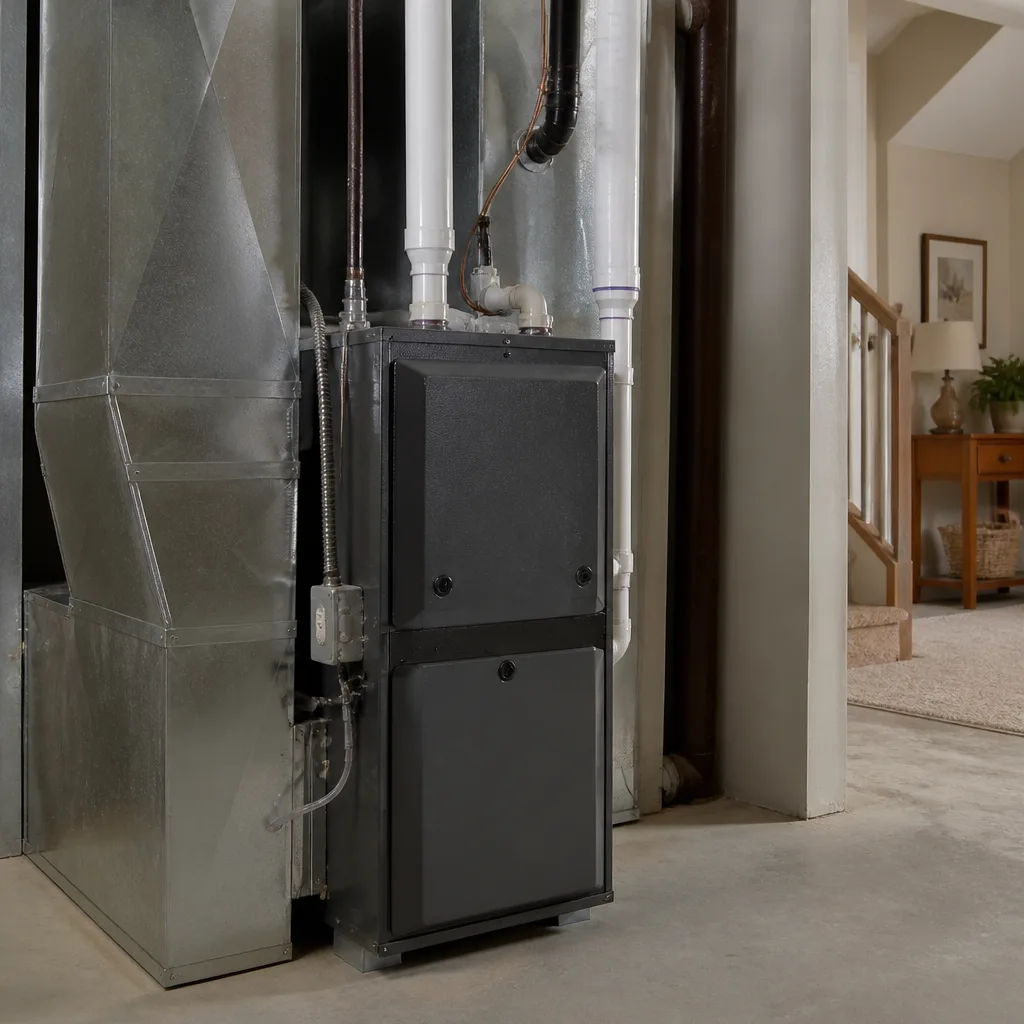 Furnace & heating
 AC repair
 Heat pumps
 Ductless mini splits
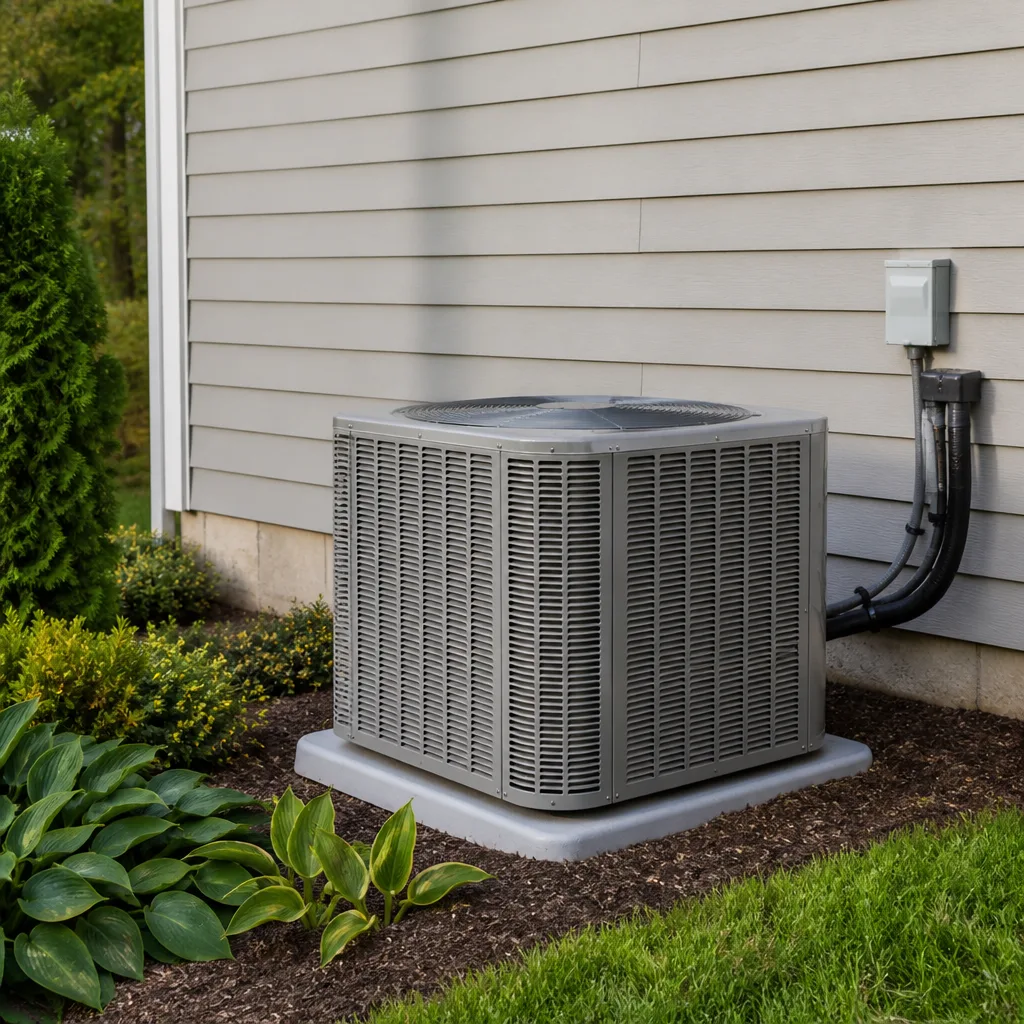 Carrier
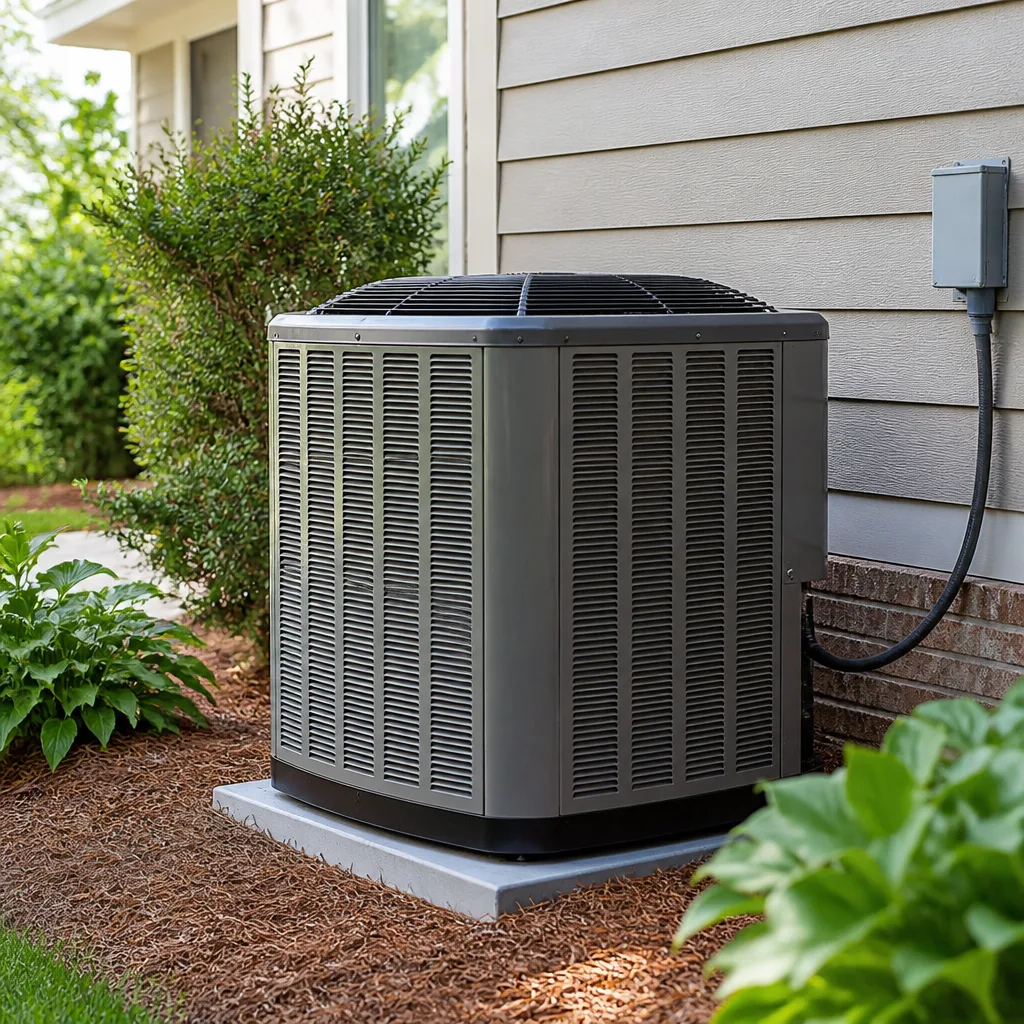 Trane
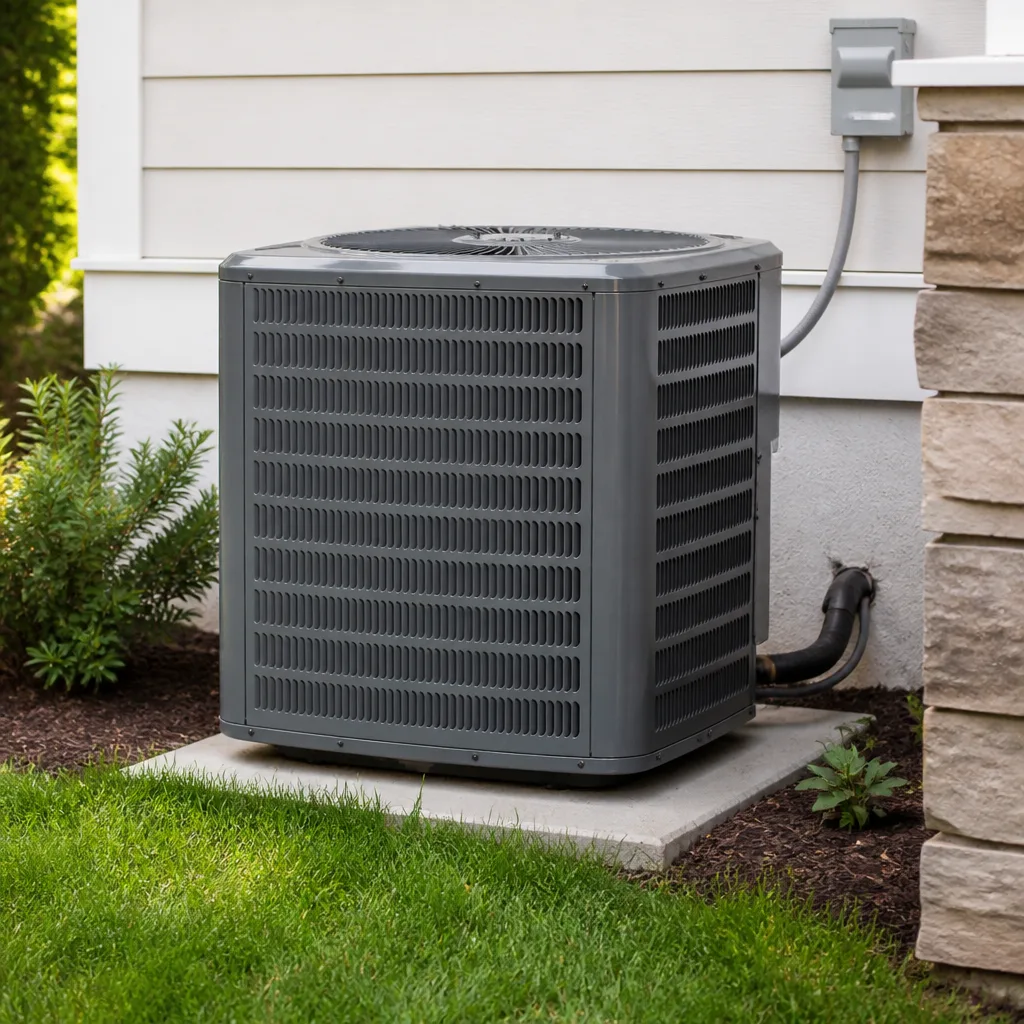 Goodman
Seasonal tune-up and full diagnostic on your Carrier, Trane, or Goodman system - readings shown to you before any repair is proposed
Diagnosis first, numbers second - you approve the repair price before a single part goes in.
Get your free estimateThe Complete Furnace Replacement Guide for Salt Lake City Homeowners
Most furnace buying guides are written as if every house sits at sea level in a mild climate. Neither is true here. Salt Lake City sits at roughly 4,226 feet above sea level, and the Wasatch Front’s dry cold, canyon winds, and sharp overnight temperature swings change how a furnace actually performs once it’s bolted to your floor. A unit rated at 95% AFUE at sea level doesn’t deliver that number at elevation, and a system sized for a mild climate will short-cycle its way through a Salt Lake City January. This guide walks through what replacement really involves in Salt Lake City: how elevation affects combustion and efficiency ratings, why a proper load calculation matters more here than almost anywhere, how nine major brands handle cold-climate staging differently, and what permits and inspections Salt Lake County requires before the first screw goes in.
Quick Answer
A furnace replacement in Salt Lake City typically runs $4,200 to $9,800 installed, depending on system size, efficiency tier, and whether ductwork or venting needs work. The right replacement starts with a room-by-room load calculation, not a square-footage guess, because Salt Lake City’s 4,226-foot elevation changes how a furnace’s rated efficiency translates to real heat output. Get a written fixed price and a set install date before anyone touches the old unit.
Styles & brands we work with
- AC repair
- Furnace & heating
- Heat pumps
- Ductless mini splits
- Carrier
- Trane
- Goodman
Table of Contents
- Why Elevation Changes Everything in Salt Lake City
- Load Calculations and the Undersizing Problem
- How Nine Major Brands Handle Cold-Climate Staging
- Permits and Inspections in Salt Lake City and Salt Lake County
- What Furnace Replacement Costs in Salt Lake City
- Why Brand-Agnostic Contractors Get Better Outcomes
- The Replacement Process, Step by Step
- Common Mistakes to Avoid
Why Elevation Changes Everything in Salt Lake City
At 4,226 feet, the air in Salt Lake City is thinner than the air most furnace manufacturers use as a baseline. Thinner air carries less oxygen per cubic foot, and gas furnaces need a specific air-to-fuel ratio to burn cleanly. When that ratio drifts, a furnace can lose measurable efficiency, produce a weaker flame, and run longer to hit the same thermostat setpoint. A unit advertised at 95% AFUE at sea level won’t hit 95% here.
That doesn’t mean high-efficiency furnaces are a bad idea in Salt Lake City. It means the AFUE number on the box is a starting point, not a promise. Manufacturers publish derate tables for altitude, and a contractor who knows the local market will check them before recommending a model. Most condensing furnaces need a combustion-air adjustment or a different orifice size above 4,000 feet to compensate.
There’s a second elevation issue that gets almost no attention: venting. High-efficiency condensing furnaces produce acidic condensate, and the venting configuration changes with altitude and with the length of the run. In Salt Lake City homes where the furnace sits in a basement or a tight mechanical closet, the vent run is often longer than the manufacturer’s default chart assumes.
Cold climate matters too. Salt Lake City winters bring dry, cold air and frequent inversions that trap colder air in the valley. Furnaces here spend more hours at high firing rates than in milder markets, which puts more wear on heat exchangers and blowers. A system that’s correctly sized and altitude-adjusted handles that load. One that’s oversized short-cycles, and one that’s undersized runs flat out all winter.
If you’re already noticing uneven heat or a furnace that never seems to catch up, that’s worth diagnosing before you shop for a replacement. Our furnace repair team can tell you whether the problem is the equipment or the setup.
Load Calculations and the Undersizing Problem
Undersizing is the most common mistake we see in Salt Lake City furnace replacements, and it usually starts with a shortcut. A contractor measures square footage, divides by a rule of thumb, and writes a proposal. That number ignores insulation, window count and orientation, ceiling height, duct condition, and the actual design temperature for this climate zone.
The correct method is a room-by-room load calculation, often called a Manual J. It accounts for:
- Insulation values in walls, attic, and crawlspace
- Window area, glazing type, and which direction each window faces
- Air infiltration, which is higher in older Salt Lake City homes with original single-pane windows
- Duct location and leakage, especially in unconditioned attics or crawlspaces
- The local winter design temperature, not a national average
Utah’s climate zone means furnaces here are sized for colder design conditions than coastal or southern markets. A house that would take a 60,000 BTU furnace in a mild climate may genuinely need an 80,000 BTU unit here, but the calculation has to prove it. Guessing high wastes money on equipment and creates short-cycling. Guessing low leaves you cold on the coldest nights of the year.
Here’s the part that matters for homeowners: the output rating on a furnace is not the same as its input rating. A furnace with 80,000 BTU input at 80% AFUE delivers about 64,000 BTU of actual heat. At altitude, the effective output drops further. Compare output to output, never input to input, when you’re evaluating proposals.
Ask any contractor you’re considering to show you the load calculation. A one-page proposal with no numbers on it is a red flag in Salt Lake City, where the temperature swing between a mild October afternoon and a January cold snap is large enough that sizing errors show up fast.
How Nine Major Brands Handle Cold-Climate Staging
Staging is the feature that matters most in a cold-climate replacement. A single-stage furnace runs at full output or nothing. A two-stage furnace runs at roughly 65% output most of the time and ramps to full when needed. A modulating furnace adjusts output continuously in small increments. In Salt Lake City, where winter days can swing 30 degrees between morning and afternoon, staging is what keeps the house comfortable without blasting heat and then waiting.
How the major brands approach it differs:
- Carrier and Bryant (same parent company, shared engineering) both offer two-stage and fully modulating furnaces, and Bryant tends to sit a tier below Carrier in price for near-identical internals. Good choices when you want variable output without the top-of-line price.
- Trane and American Standard (also siblings) lean on strong heat exchanger designs and two-stage mid-range models. American Standard is often the better value of the two for the same reason Bryant undercuts Carrier.
- Lennox has a deep lineup, including high-efficiency modulating models, but the parts network and service availability vary by market. Worth asking who can service it locally before you commit.
- Goodman sits at the value end, with simpler single-stage and two-stage options. Reliable when installed correctly, and shorter on premium comfort features.
- Rheem covers a broad middle ground with competitive two-stage models and straightforward controls.
- York offers solid two-stage options and is often available at a lower installed price than the premium brands with similar output ratings.
- Daikin has been expanding aggressively into residential furnaces and pairs well with its heat pump systems, which matters if you’re thinking about a future dual-fuel setup.
None of these brands is universally “best.” The right pick depends on your load calculation, your budget, and which features actually matter in your Salt Lake City home. That’s why the contractor matters more than the badge on the door. Our technicians have up to 15 years of experience working across all nine brands, so recommendations are driven by the house, not a dealer quota.
Permits and Inspections in Salt Lake City and Salt Lake County
Furnace replacement in Salt Lake City requires a mechanical permit, and the work must pass inspection before the job is considered complete. Most cities and counties require this, but the specifics vary by jurisdiction, so confirm the requirements with Salt Lake City’s building department and Salt Lake County’s before any work begins.
What that means for you in practice:
- The permit should be pulled before work starts. A contractor who suggests skipping it is creating a problem for you down the road, not saving you money.
- The inspection typically covers the furnace installation, venting, gas connections, and electrical work. Depending on the scope, a separate electrical or gas permit may be required.
- Inspection results should be documented. Keep a copy of the permit and the inspection sign-off with your home records. It matters when you sell.
- Equipment replacement without a permit can void manufacturer warranties. This is one of those costs that doesn’t show up until years later.
Salt Lake County also has specific requirements around venting and combustion air in some cases, particularly where a new high-efficiency furnace replaces an older atmospheric-vent unit. The venting configuration changes, and the inspection confirms it’s correct.
Ask any contractor you’re evaluating to tell you who pulls the permit, what inspections are required, and who covers any corrections if the first inspection fails. A written answer to all three is a good sign. A shrug is not.
What Furnace Replacement Costs in Salt Lake City
Furnace replacement in Salt Lake City typically costs between $4,200 and $9,800 installed, with most jobs landing in the $5,500 to $7,500 range. The final number depends on the system size, the efficiency tier, the brand, and whether ductwork or venting needs modification. That’s a typical range, not a quote; the written estimate sets the final price.
| Scope | Typical Estimated Cost |
|---|---|
| Single-stage 80% AFUE furnace, standard replacement | $4,200 – $5,800 |
| Two-stage 80% AFUE furnace, standard replacement | $5,200 – $7,200 |
| Two-stage 95%+ AFUE condensing furnace | $6,500 – $9,800 |
| Modulating high-efficiency furnace | $7,500 – $11,500 |
| Duct modification or new venting (added) | $400 – $1,800 |
| Combustion air or venting upgrade for high-efficiency | $300 – $1,200 |
Those ranges reflect Salt Lake City’s market. Labor costs, permit fees, and the altitude derate adjustments add to what you’d pay in a lower-elevation metro. High-efficiency condensing furnaces also cost more to install here because the venting often has to be reconfigured, and the condensate line needs proper routing and freeze protection.
What drives you to the top of the range: a system that needs new venting, a house with ductwork problems, and moving from a single-stage to a modulating unit. What keeps you low: a straightforward swap in a home where the existing venting is compatible and the ductwork is sound.
We provide free estimates and a written fixed price before any work begins. That estimate should include the equipment, labor, permit, and any venting or duct work. If a proposal leaves out the permit or the venting, ask why. Our Lockhart AC Repair team walks through the full scope line by line. Call (855) 473-8712 for an exact quote on your home.
Why Brand-Agnostic Contractors Get Better Outcomes
A contractor who only sells one brand has one brand to recommend. That may be a fine brand, but the recommendation isn’t being tested against alternatives. A brand-agnostic contractor compares Carrier, Trane, Lennox, Goodman, Rheem, York, Daikin, Bryant, and American Standard against your specific load calculation, budget, and comfort goals. The result is usually a better-fit system at a fair price.
There’s a service-side benefit, too. When the contractor who installed your furnace is also trained on the other eight brands, you don’t hit the “we don’t service that brand” dead end when you call for a repair. That matters in Salt Lake City, where the housing stock spans decades and the neighborhood mix means you’ll find every major brand on the same street.
We’re trained on all nine brands, which means:
- Recommendations are driven by the home and the budget, not a dealer program
- Service continues after the install across the full equipment lifecycle
- No pressure to replace when a repair is still the smarter financial call
- One team handles both the furnace and the cooling side of the house
Whatever brand is in your home, we know it. If you’re replacing, we’ll tell you the truth about whether it makes financial sense. If you’re not sure yet, our Salt Lake City team can help you think it through.
The Replacement Process, Step by Step
Here’s how a furnace replacement typically unfolds in Salt Lake City, from first call to post-install check:
- Load calculation and system assessment. A technician measures the house, checks insulation, windows, and ductwork, and runs a room-by-room load calculation. This determines the correct system size.
- Equipment recommendations. With the load calculation in hand, you get options across brands and efficiency tiers, with a written fixed price for each. The proposal should explain why each model fits your house.
- Permit application. The permit is pulled before work starts.
- Equipment order and installation scheduling. Replacement equipment is ordered and a set install date is scheduled. This is not same-day work; it requires lead time.
- Removal and installation. The old furnace comes out, the new one goes in. Venting, gas, electrical, and condensate connections are all part of the job.
- Combustion testing and altitude adjustment. The system is tested and the combustion-air setting is adjusted for Salt Lake City’s elevation. This is the step that separates a proper install from a box swap.
- Inspection. The permit is closed out after inspection.
- Walkthrough and documentation. You get the equipment details, the permit record, and a walkthrough of how the new system operates.
What you should never hear during this process: “The AFUE rating is 95%, so that’s what you’ll get.” That rating is measured at sea level. At elevation, the real number is lower, and a proper job accounts for it.
Common Mistakes to Avoid
- Accepting a square-footage quote. A rule-of-thumb sizing shortcut skips the load calculation. In Salt Lake City’s climate zone, that mistake shows up as a furnace that’s oversized and short-cycling, or undersized and always running.
- Skipping the altitude derate check. A furnace installed without adjusting for the 4,226-foot elevation won’t deliver its rated efficiency. Ask specifically how the contractor accounts for it.
- Letting the contractor skip the permit. An unpermitted install in Salt Lake County can create problems when you sell and put the manufacturer warranty at risk.
- Comparing input ratings instead of output ratings. A 100,000 BTU input furnace at 80% AFUE gives you 80,000 BTU of heat. Compare output to output when you’re evaluating proposals.
- Buying on brand name alone. A premium furnace installed poorly underperforms a mid-tier furnace installed correctly. The install and the setup matter more than the badge.
- Ignoring the ductwork. New equipment on failing ducts wastes part of what you paid for. Have the ducts evaluated as part of the replacement.
- Replacing without a repair assessment. Sometimes a repair extends the current furnace’s life by several years. Ask whether that’s the smarter financial call before you commit to a replacement.
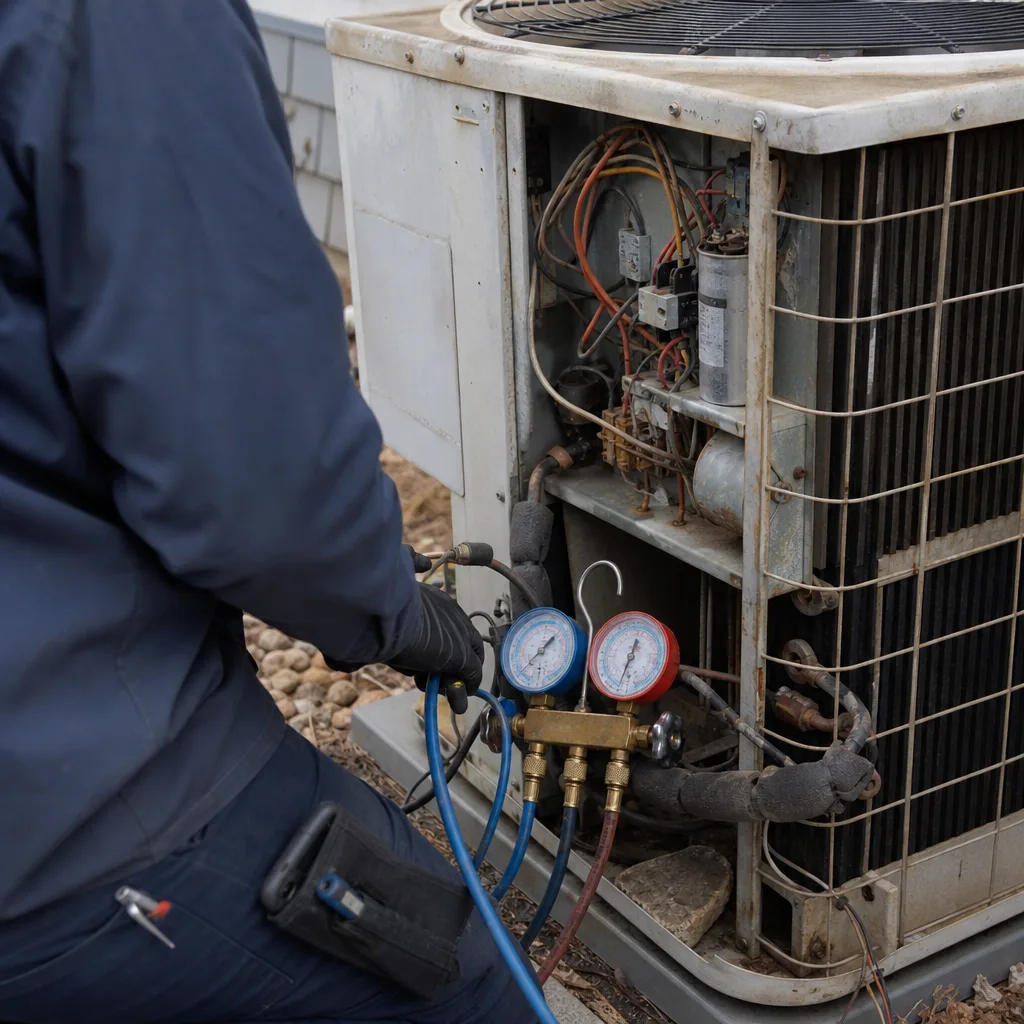
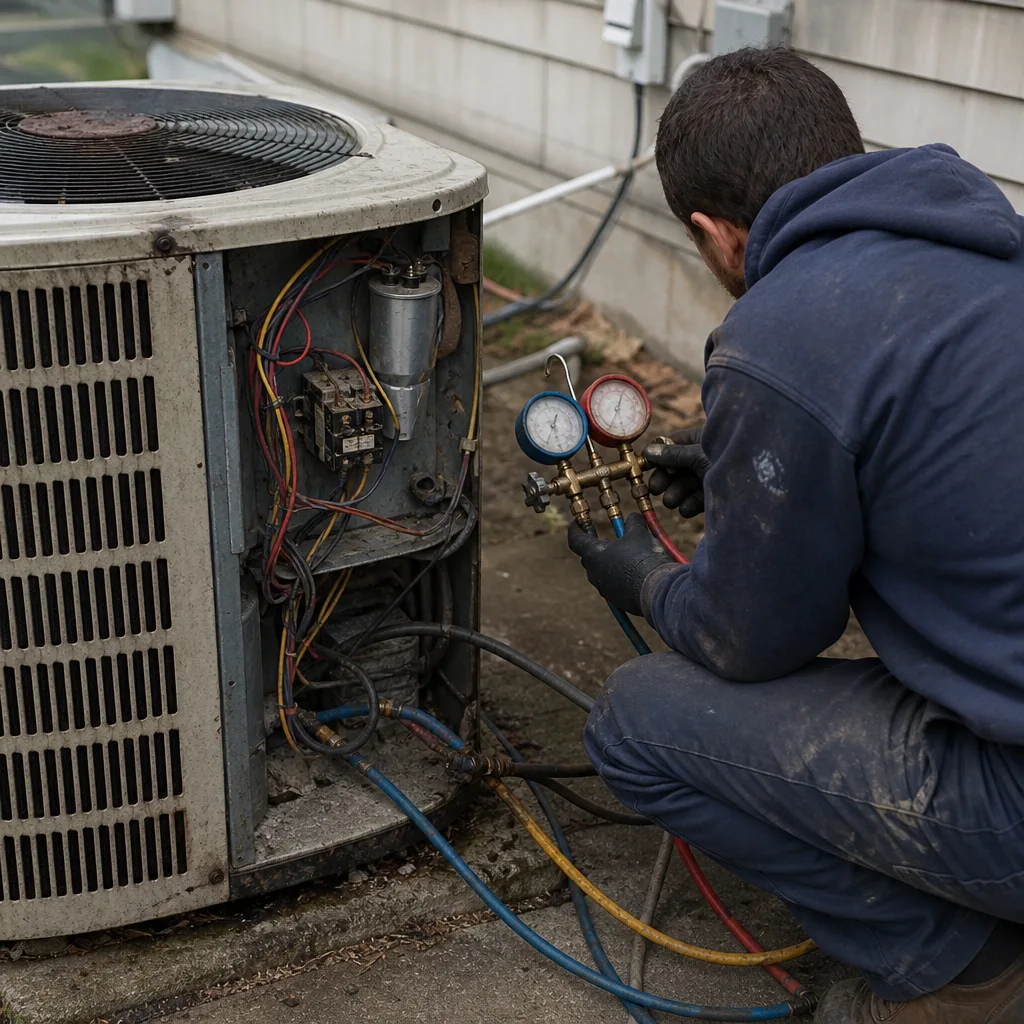
See the difference
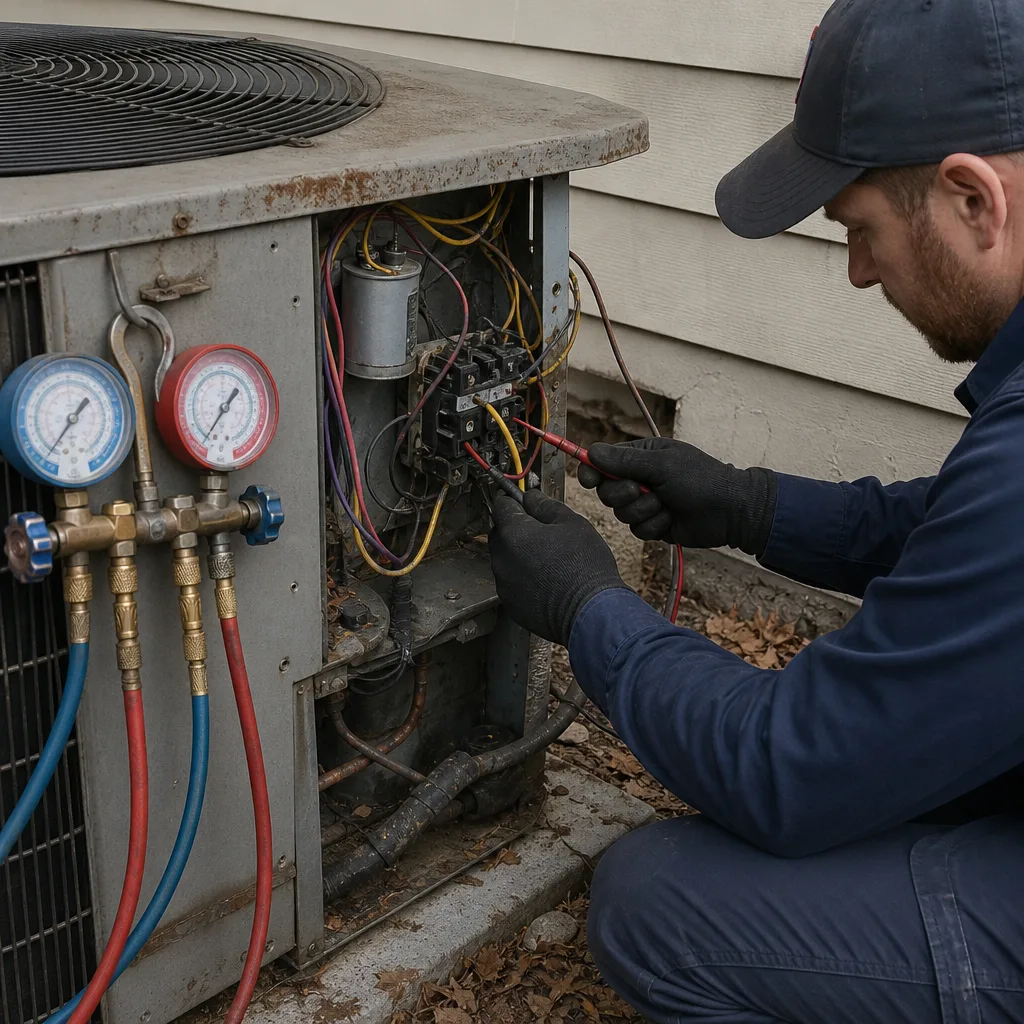 Before
 After
 Before
 After
 Before
 After
When to Call a Professional
Some furnace decisions are easy to defer. Others can’t wait. Call a professional if your furnace is producing carbon monoxide alarms, if the heat exchanger shows visible cracks or corrosion, if the system has failed completely in cold weather, or if you’re seeing rising gas bills without a clear explanation. Cracked heat exchangers are a safety issue, not a scheduling preference; don’t run the system while you wait for an inspection. At elevation, combustion problems compound, and a technician with a combustion analyzer catches what a homeowner’s visual check can’t. If your furnace is 15 to 20 years old and has needed multiple repairs in recent winters, a replacement evaluation is worth scheduling before it fails on the coldest night of the year. Lockhart AC Repair offers free estimates in Salt Lake City. Whether it’s repair or replacement, we’ll tell you the truth about which makes financial sense. Call (855) 473-8712. We answer 24/7. Fast dispatch from 7am to 7pm, Sunday through Friday.
Frequently Asked Questions
Furnace replacement in Salt Lake City typically costs $4,200 to $9,800 installed, depending on system size, efficiency tier, and whether venting or ductwork needs work. Most jobs land between $5,500 and $7,500. Those are typical ranges, not quotes; the written estimate sets the final price. Call (855) 473-8712 for an exact quote on your home; estimates are free.
Salt Lake City sits at 4,226 feet, and thinner air at elevation changes the combustion-air ratio, so a furnace rated at 95% AFUE at sea level won’t deliver that number here. A proper install includes a combustion-air adjustment or orifice change for the altitude. Ask any contractor to confirm they account for it.
Repair usually wins if the furnace is under 15 years old, the repair is a single fix, and the heat exchanger is sound. Replacement makes more sense when the system is aging, repairs are stacking up, or the heat exchanger is compromised. We evaluate both honestly because we do both. Call (855) 473-8712 to talk through your options.
Furnace replacement isn’t same-day work. It requires a load calculation, equipment ordering, permit application, and a scheduled install date. We promise a written fixed price and a set install date, not a rushed same-day swap. Repairs are different; if your system has failed, our AC installation and heating teams can assess whether an emergency fix is possible. Call (855) 473-8712.
We’re trained on nine major brands: Carrier, Trane, Lennox, Goodman, Rheem, York, Daikin, Bryant, and American Standard. That breadth means we can service whatever is in your home and recommend replacement equipment based on your house and budget rather than a dealer program. Call (855) 473-8712 to ask about your specific system.
Rebate and incentive programs change frequently, so we don’t quote them from memory. We can tell you what to ask your utility provider and what documentation a contractor needs to supply. Ask about rebates and financing during the estimate, and get the answer in writing. Call (855) 473-8712 to start that conversation.
The Bottom Line
Furnace replacement in Salt Lake City isn’t a straightforward box swap. Elevation, climate, sizing, and local permit rules all shape which system actually works in your house. The short version: demand a load calculation, ask how the contractor adjusts for 4,226 feet of elevation, get the permit pulled, and compare output ratings instead of input ratings. Choose a contractor who can service whatever brand is already in your home rather than one who’s tied to a single manufacturer. That’s the difference between a furnace that runs well for the next 15 to 20 years and one that always seems to be catching up.
One call covers your furnace and your AC, and free estimates are available across Salt Lake City. Call (855) 473-8712. We answer 24/7. Fast dispatch from 7am to 7pm, Sunday through Friday.
Written by the team at Lockhart AC Repair.